By Amanda Rose Newton
If you’ve spent any time researching natural pest control, you’ve probably come across diatomaceous earth (DE). This fine white powder has become a favorite among gardeners, homeowners, and even livestock owners looking for an alternative to traditional pesticides.
But what exactly is diatomaceous earth, where does it come from, and how does it work? The answer is surprisingly fascinating and it starts with some of the smallest organisms on Earth.
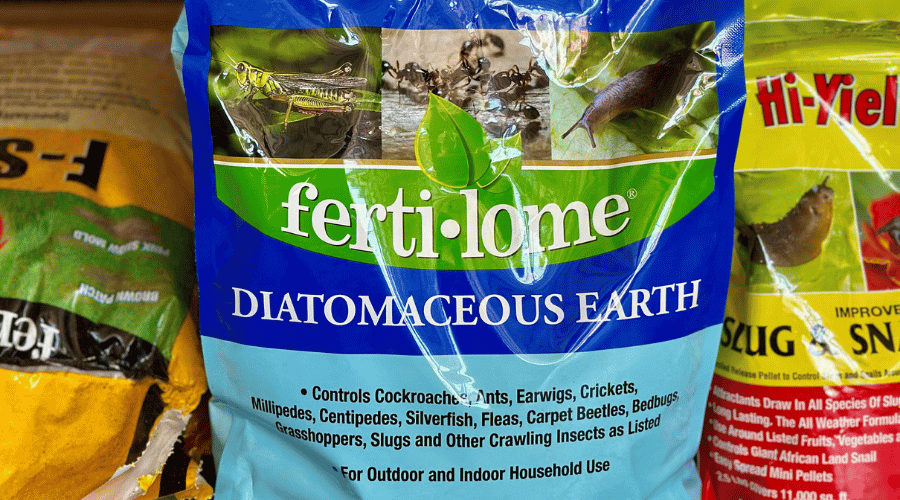
What is Diatomaceous Earth?
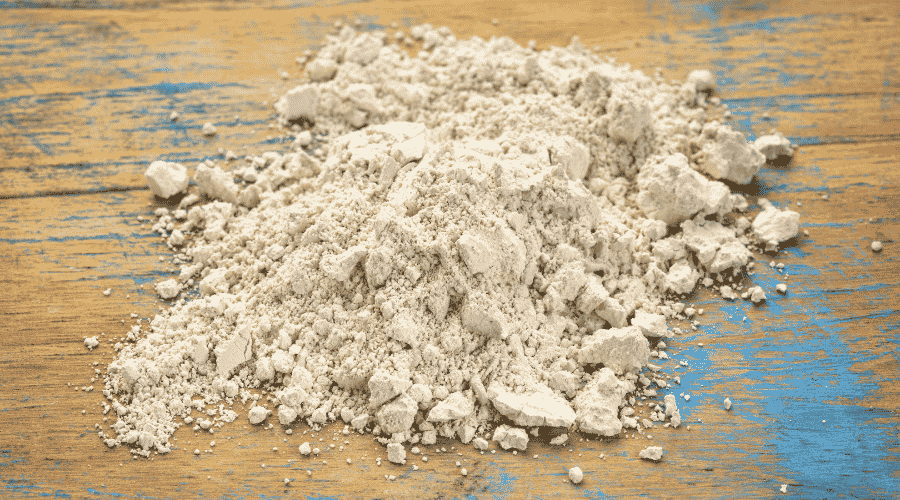
Diatomaceous earth is a naturally occurring sedimentary rock made from the fossilized remains of microscopic aquatic organisms called diatoms.
Diatoms are a type of phytoplankton, which are tiny algae that float in oceans, lakes, and rivers. Like plants, they use sunlight to produce energy through photosynthesis and are responsible for producing an estimated 20–30% of the oxygen on Earth. Despite their microscopic size, they play a major role in aquatic ecosystems and global carbon cycling.
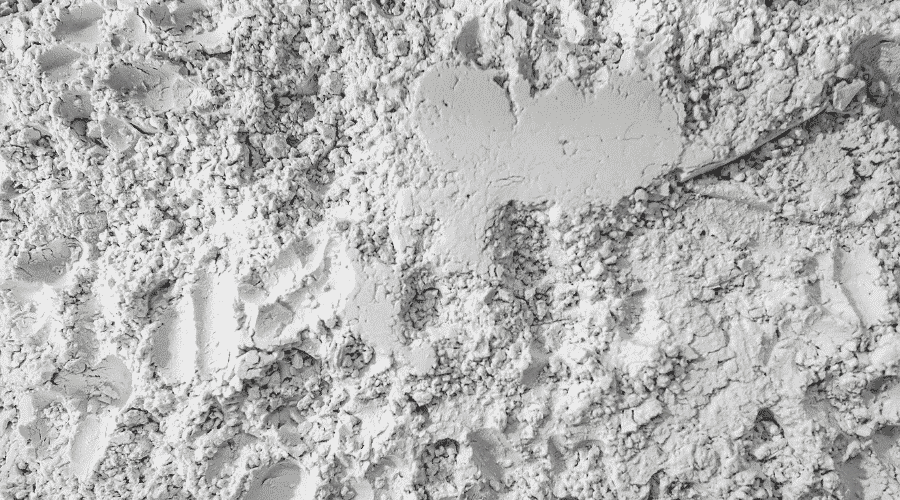
Over millions of years, the silica-rich shells of dead diatoms accumulated on lake and ocean bottoms. These deposits were eventually mined and processed into the fine powder we know today as diatomaceous earth.
Tiny Organisms with Incredible Beauty
One of the most remarkable things about diatoms is how beautiful they are under a microscope.
Their cell walls, called frustules, are made primarily of silica, which is the same material found in glass. These intricate shells display stunning geometric patterns, symmetry, and elaborate designs that look more like tiny works of art than algae.
Victorian scientists were so captivated by diatoms that they created elaborate microscope slides featuring carefully arranged specimens. Even today, diatoms remain popular subjects for scientific photography and microscopy enthusiasts.
Why Silica Matters
The silica that makes diatom shells so strong and beautiful is also what gives diatomaceous earth its pest-control properties.
Silica is a naturally occurring mineral that provides structure and durability to the microscopic shells. When those shells are ground into powder, they create tiny abrasive particles that can damage the protective outer layer of many insects.
While some gardeners associate silica with stronger plant growth and improved stress tolerance, the primary benefit of diatomaceous earth in the landscape is pest management rather than plant nutrition.
How Does Diatomaceous Earth Control Pests?
Unlike chemical insecticides, diatomaceous earth works through a physical mechanism.
The microscopic silica particles have sharp edges that scratch and damage the waxy outer coating of many insects. Once this protective layer is disrupted, insects lose moisture and eventually die from dehydration.
Because DE works mechanically rather than chemically, pests are unlikely to develop resistance to it.
Pests Diatomaceous Earth Works Best Against
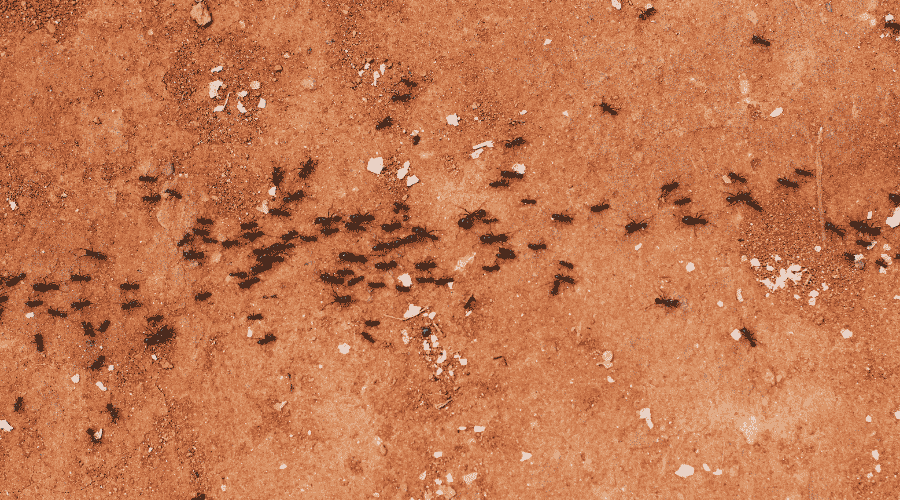
Diatomaceous earth is most effective against crawling insects with an exposed exoskeleton, including:
- Ants
- Fleas
- Cockroaches
- Earwigs
- Silverfish
- Sowbugs and pillbugs
- Beetles
- Some garden pest larvae
In the garden, DE can be useful for reducing populations of insects that travel across treated surfaces. It is particularly helpful around raised beds, vegetable gardens, containers, and landscape borders where pests regularly crawl across the soil surface.
When Diatomaceous Earth Isn’t the Best Choice
While DE can be effective, it isn’t a miracle solution.
It generally works poorly against:
- Flying insects
- Insects that do not contact treated surfaces
- Pests hidden inside plant tissue
- Heavy infestations requiring immediate control
Because DE is non-selective, it can also affect beneficial insects if they come into contact with treated areas. For this reason, avoid applying it directly to flowers where pollinators such as bees and butterflies may visit.
How Diatomaceous Earth Can Help Plants
When used properly, DE can provide several benefits:
- Reduces populations of crawling garden pests
- Provides a non-chemical pest management option
- Can be incorporated into integrated pest management (IPM) programs
- Leaves no toxic residues on edible crops
- Can help protect seedlings and vulnerable young plants from insect damage
Many gardeners appreciate DE because it offers a low-toxicity option that can be used around vegetable gardens, raised beds, and ornamental landscapes.
Can Diatomaceous Earth Hurt Plants?
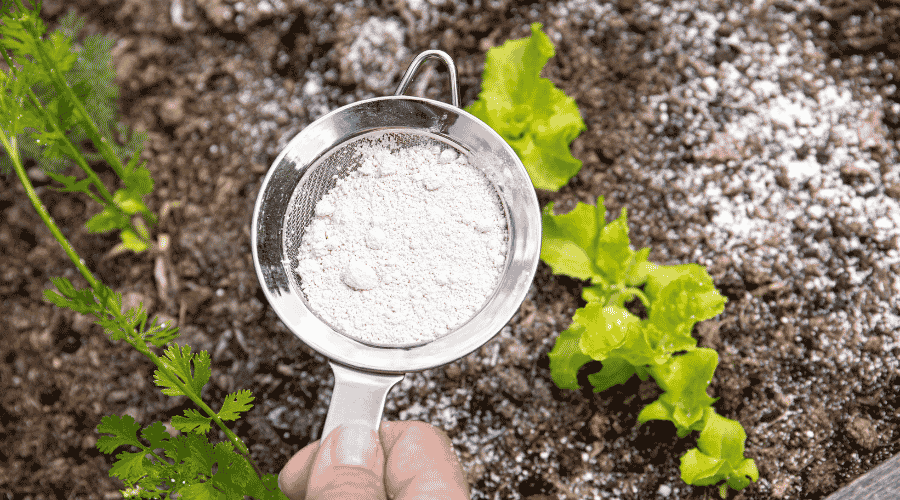
Diatomaceous earth itself does not typically damage plants.
However, overapplication can create a dusty coating on leaves that may reduce photosynthesis until washed away. Applying thick layers around seedlings can also create an unnecessary barrier for beneficial insects and soil microorganisms.
As with any garden product, more is not always better.
Food-Grade vs. Pool-Grade Diatomaceous Earth: Know the Difference
Not all diatomaceous earth products are created equal.
When shopping for DE, you’ll typically encounter two types: food-grade diatomaceous earth and pool-grade (filter-grade) diatomaceous earth. While both originate from fossilized diatoms, they are processed very differently and have very different uses.
Food-Grade Diatomaceous Earth
Food-grade DE is the type commonly sold for gardening, pest management, and agricultural applications. It has not been subjected to the extreme heat treatment used in pool filtration products and is the appropriate choice for landscape and garden use.
This is the product gardeners should use when applying DE around ornamental plants, vegetable gardens, raised beds, and other landscape areas.
Pool-Grade Diatomaceous Earth
Pool-grade DE is manufactured specifically for swimming pool filtration systems. During production, it is heat-treated, or “calcined,” at extremely high temperatures. This process changes the silica structure and increases the amount of crystalline silica present.
While this makes it highly effective for filtering water, it is not intended for garden use and should never be used for pest control around plants, pets, or people.
It Makes a Difference!
Pool-grade DE can pose a greater inhalation risk and is not labeled for garden pest management. Always read the product label carefully and purchase food-grade diatomaceous earth when your goal is insect control.
Pro-tip: if the package is marketed for swimming pool filters, keep it out of the garden.
Garden Bug Pro-Tips for Using Diatomaceous Earth
Keep It Dry
This is the most important rule when using DE.
Diatomaceous earth is only effective when dry. Once it becomes wet from rain, irrigation, or heavy dew, the sharp particles lose much of their effectiveness.
In Florida’s humid climate, frequent reapplication may be necessary, especially during the rainy season.
Store It Properly
Florida’s humidity can cause DE to absorb moisture from the air over time. Store unused product in a sealed container in a dry location to maintain effectiveness.
Apply Lightly
A thin dusting works better than thick piles. Insects need to crawl through the material, not around it.
Wear a Dust Mask
Although food-grade DE is considered relatively safe, the fine dust can irritate lungs and airways if inhaled during application.
Reapply After Rain
Summer thunderstorms can quickly wash away treatments. Inspect treated areas and reapply when conditions become dry.
Focus on Problem Areas
Apply around plant bases, entry points, cracks, crevices, and insect pathways rather than coating entire garden beds.
Beyond the Garden: Surprising Uses for Diatomaceous Earth
Diatomaceous earth has many uses beyond pest control.
One of its most famous applications is filtration. DE is commonly used to filter:
- Beer
- Wine
- Fruit juices
- Swimming pool water
Its microscopic structure allows liquids to pass through while trapping tiny particles and impurities.
DE has also been used in absorbents, industrial products, animal agriculture, and even scientific research.
Fun Facts About Diatoms
- Diatoms are responsible for a significant portion of the oxygen we breathe. Plants get a lot of the credit, but most of the O2 in the atmosphere is from the ocean initially.
- There are an estimated 100,000 or more species of diatoms worldwide.
- Their silica shells are so intricate that they were once used to test the quality of microscope lenses.
- Some diatom fossils are millions of years old.
- Every spoonful of diatomaceous earth contains countless fossilized microscopic organisms.
- Scientists often refer to diatoms as the “jewels of the sea” because of their incredible microscopic patterns.
Diatomaceous earth is a unique example of how ancient natural materials can provide practical solutions for modern gardeners. Derived from microscopic phytoplankton that lived millions of years ago, DE offers a simple, non-chemical way to manage many crawling insect pests.
While it is not a cure-all for every pest problem, it can be a valuable tool when used correctly, especially as part of an integrated pest management strategy.
The next time you see a bag of diatomaceous earth at your local garden center, remember that you’re looking at the fossilized remains of billions of tiny algae whose intricate glass-like shells continue to serve a purpose long after their time in ancient lakes and oceans.