By Amanda Rose Newton
If you’ve spent a summer in Central Florida, you know the routine: afternoon clouds roll in, the rain pours down, and suddenly that innocent-looking low spot in the yard resembles a miniature pond.
A little temporary puddling after a Florida downpour isn’t necessarily a problem. But if certain parts of your landscape stay wet for hours or even days, you may start seeing thinning turf, struggling ornamentals, root problems, mosquitoes, and plenty of mud.
Before fighting that soggy spot, however, take a closer look. The wettest part of your yard might be telling you what it wants to become.
Instead of repeatedly replacing plants that hate wet feet, you can improve drainage where necessary, redirect water more thoughtfully, or embrace the moisture and create a garden filled with plants adapted to periodically wet conditions.
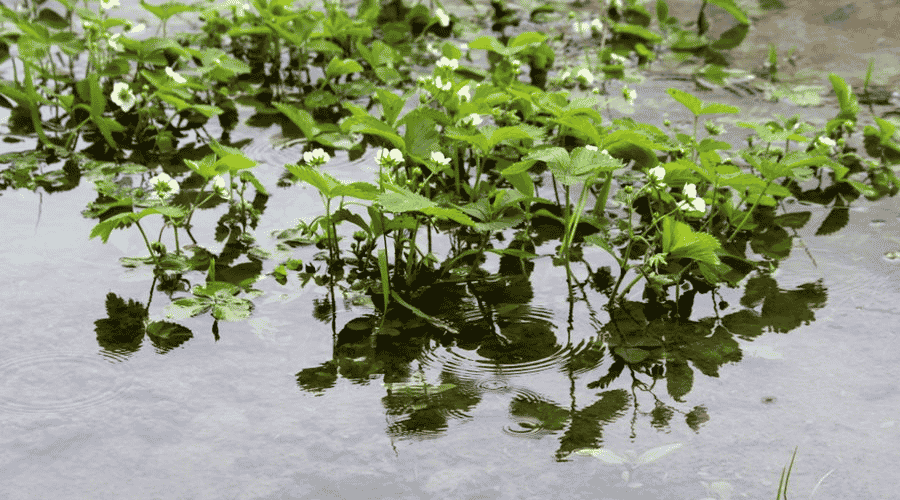
First, Figure Out Why the Water Is There
Take a walk around your property during or immediately after a heavy rain. Where does the water come from? Where does it travel? And, most importantly, how long does it stay?
A puddle that disappears relatively quickly after a summer thunderstorm is very different from an area that remains saturated for days.
What’s Causing That Soggy Spot?
Before you start digging, look for some of the most common causes of standing water:
- Low spots: Even a small depression can collect a surprising amount of water during our summer downpours.
- Compacted soil: Construction, foot traffic, and heavy equipment can leave soil that water has trouble penetrating.
- Downspouts: Roof runoff concentrated in one location can overwhelm an otherwise well-drained planting bed.
- Hardscaping: Driveways, patios, sidewalks, and other impervious surfaces can redirect large amounts of runoff.
- Poor grading: Water may naturally flow toward a bed, lawn area, or even the house instead of away from it.
- Seasonally high water table: Some Florida properties simply have areas that become much wetter during the rainy season.
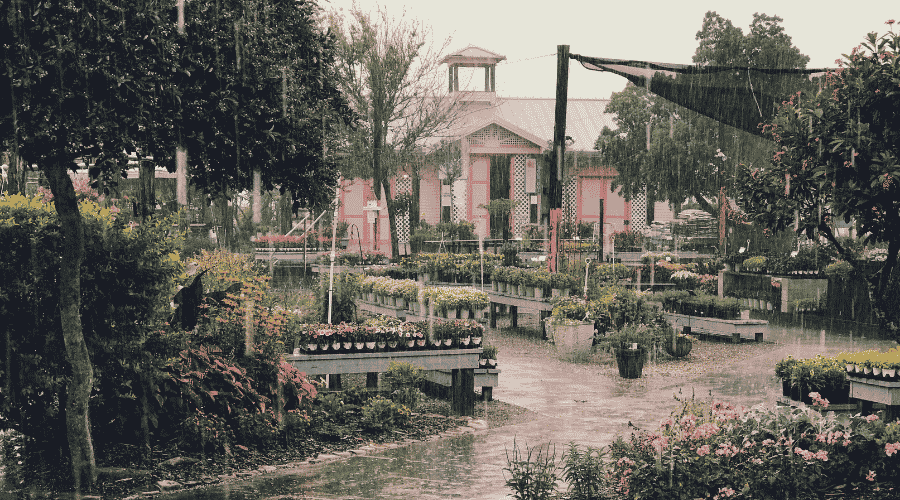
Also pay attention to your existing plants. Yellowing, declining plants in a consistently wet area may not need more fertilizer or attention. They may simply be planted in the wrong place.
Don’t Drown a Plant That Wants Dry Feet
Roots need oxygen as well as water. When soil remains saturated, water fills spaces that would ordinarily contain air. Plants that aren’t adapted to those conditions can develop stressed or damaged root systems.
That means one of the simplest solutions is also a fundamental principle of University of Florida’s Florida-Friendly Landscaping™: right plant, right place*.
If you know part of your yard routinely floods, don’t keep replacing moisture-sensitive plants there.
You can also get creative with elevation. Create slightly raised planting areas or berms for plants that need better drainage, while allowing the lowest portion of the landscape to continue collecting water. Rocks can help define the transition and create an attractive dry-creek effect when the area isn’t holding water.
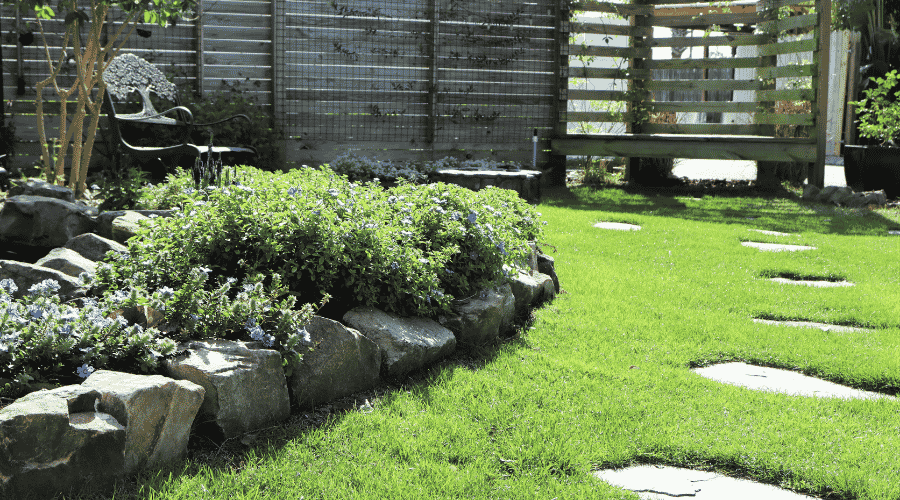
The result can look intentional rather than like the garden simply lost an argument with the rainy season.
Redirect the Water, But Don’t Just Make It Someone Else’s Problem
If a downspout is dumping water directly into a planting bed, redirecting it may be enough to save struggling plants. Rain barrels or cisterns can capture some roof runoff for later use, while permeable materials such as gravel, mulch, and appropriate pavers allow more water to soak into the landscape instead of rushing across it.
The goal isn’t simply to send the water somewhere else. Ideally, you want to slow it down, spread it out, and give it an opportunity to soak into the ground where appropriate.
And always keep drainage away from your home’s foundation.
Turn the Problem Spot into a Rain Garden
An environmentally-friendly solution for a naturally soggy area is to stop treating it as a problem altogether.
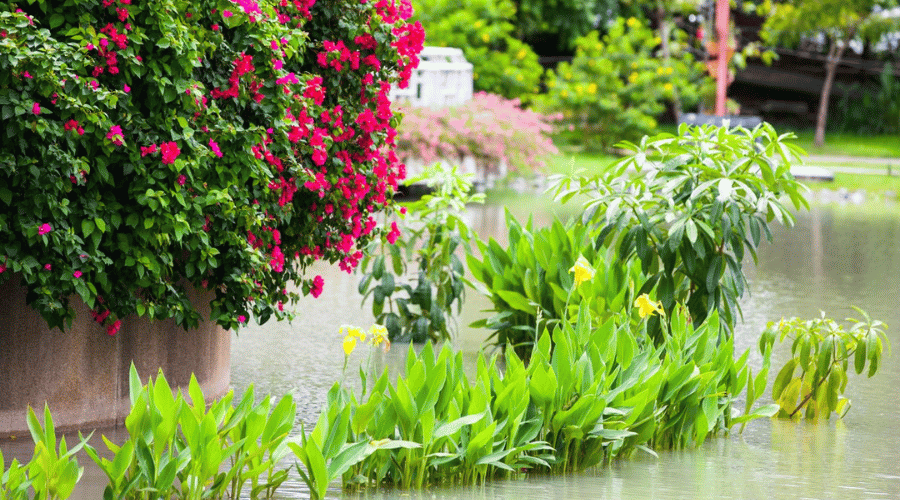
A rain garden is a shallow planted depression designed to temporarily collect stormwater and allow it to gradually infiltrate. They’re particularly useful near downspouts and in naturally low portions of the yard. Besides managing water, they can reduce runoff and help filter pollutants before that water reaches Florida’s waterways.
A rain garden is not supposed to be a permanent pond.
UF/IFAS** recommends a relatively shallow depression, generally about 4 to 8 inches deep. It should also be located at least 10 feet from the house and at least 25 feet from a septic tank or well.
And here’s the tricky part about choosing plants for a Florida rain garden: they can’t just like water.
During our rainy season, they may periodically get soaked. Then our dry season arrives and the same spot can become surprisingly dry. The best rain-garden plants can handle both temporary inundation and periods without standing water.
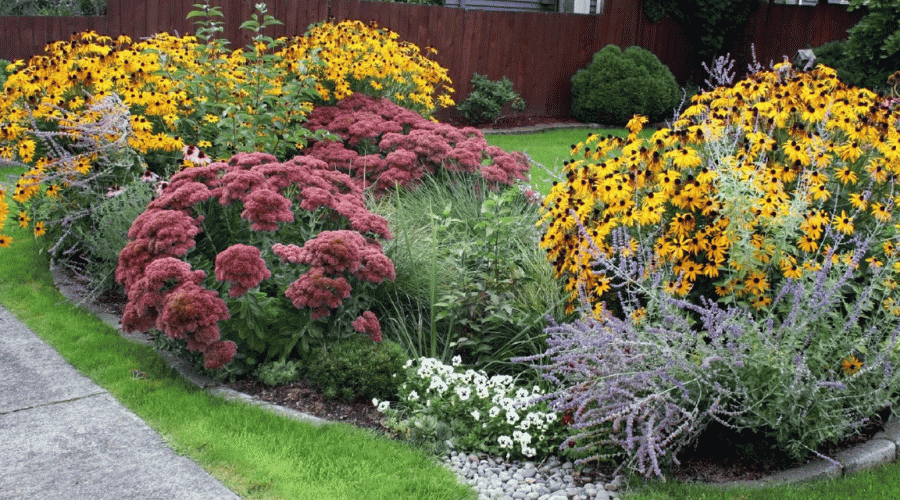
Florida Natives That Don’t Mind Wet Feet
Fortunately, Florida has no shortage of beautiful plants adapted to wet places.
Blue flag iris (Iris virginica) is an especially attractive choice, producing showy blue-purple flowers and naturally tolerating moist to wet conditions. It’s an excellent choice for the wetter portions of a rain garden.
Golden canna (Canna flaccida) is another Florida native that feels right at home around water. Its bright yellow flowers add tropical-looking color, and the plant is naturally associated with wetland conditions.
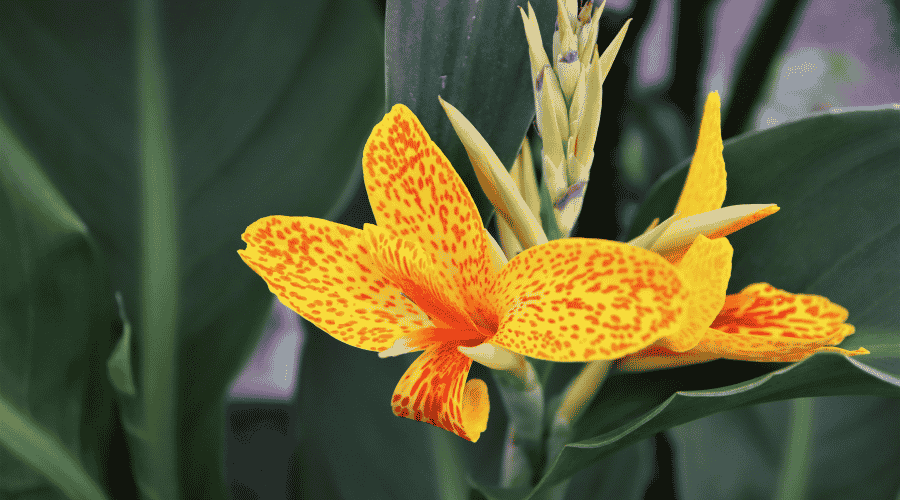
Swamp sunflower (Helianthus angustifolius) is hard to beat for fall color. Its masses of yellow flowers can turn a damp portion of the landscape into a feature rather than an eyesore.
Duck potato (Sagittaria lancifolia) and arrowhead (Sagittaria latifolia) are options for genuinely wet areas and shallow water, rather than simply a bed that gets soggy after rain.
Spider lily (Hymenocallis latifolia) can bring dramatic white flowers to wet-foot landscapes, while fogfruit (Phyla nodiflora) provides a much lower-growing option.
For something larger, wax myrtle (Morella cerifera) is a versatile native shrub or small tree that can tolerate moisture while also providing food and shelter for wildlife.
And don’t overlook grasses and grass-like plants. Muhly grass (Muhlenbergia capillaris) can work beautifully where conditions fluctuate, while rushes, sedges, and other wetland-adapted species can give a rain garden a very natural Florida look.
Quick Picks for Wet Florida Landscapes
Not sure where to start? Think about what you want the plant to do in the landscape:
- For colorful flowers: blue flag iris, golden canna, and swamp sunflower
- For the wettest spots: duck potato and arrowhead
- For lower-growing areas: fogfruit, sedges, and rushes
- For a shrub or small tree: wax myrtle
- For areas that fluctuate between wet and dry: muhly grass
Remember that “likes moisture” and “can grow in standing water” are not necessarily the same thing. Always check the needs of the individual plant before putting it in a spot that stays flooded.
Match the Plant to How Wet the Spot Really Is
Think of your wet area as having zones. The very bottom may experience standing water after storms. Slightly higher areas may remain moist but rarely flood. The outer edge may alternate between wet and completely dry.
Plant accordingly.
A true emergent or shoreline plant can tolerate conditions that would kill an ordinary landscape perennial, while a plant described as liking “moist, well-drained soil” may still rot if its roots sit underwater for days.
That variation also gives you an opportunity to create layers of different heights, textures, and bloom times instead of planting one species across the entire area.
You might place duck potato or arrowhead in the lowest, wettest portion, transition to blue flag iris or golden canna where the soil remains moist, and use plants adapted to more variable moisture toward the higher edges. Rather than seeing the changing moisture levels as a limitation, use them to create different planting zones.
What About Mosquitoes?
Standing water and mosquitoes understandably go together in everyone’s mind, but a properly functioning rain garden isn’t intended to hold permanent stagnant water. Rain gardens should be designed so that water gradually drains rather than remaining long enough to become mosquito habitat.
If water remains for long periods rather than gradually draining, investigate why. Severe compaction, grading problems, blocked drainage, or a high seasonal water table may require a different solution. Significant drainage problems near structures are worth having professionally evaluated.
Also remember to check the less obvious water-holding places around the yard. Plant saucers, buckets, clogged gutters, wheelbarrows, tarps, toys, and other containers can hold enough water for mosquitoes to develop, even when the soggy garden bed itself is not the culprit.
Sometimes the Wet Spot Is the Opportunity
Florida landscapes spend part of the year dealing with too little water and another part seemingly receiving all of it at once. Designing every square foot of the yard as though it has identical conditions is usually a losing battle.
So if you have a stubborn wet spot, work with it before you work against it.
Redirect excessive runoff when necessary. Raise plants that need drier roots. Capture roof water for later. Or turn that low, soggy corner into a rain garden filled with blue flag iris, golden canna, swamp sunflower, spider lilies, grasses, and other moisture-loving plants.
That puddle you’ve been complaining about all summer might just be showing you where your next garden belongs.
* UF IFAS Florida Friendly Landscaping: https://ffl.ifas.
** UF IFAS Rain Gardens: https://