By Amanda Rose Newton
August weddings in Florida come with plenty of advantages: long summer days, lush tropical landscapes, and an abundance of colorful flowers and foliage. They also come with heat, humidity, afternoon thunderstorms, and some very strong opinions from Mother Nature about which flowers belong outdoors.
When choosing flowers for an August wedding in Florida, beauty is only part of the equation. Flowers that look perfect in an air-conditioned shop may struggle after an hour outdoors in 90-degree heat. Choosing blooms that naturally tolerate warm conditions can help arrangements stay beautiful from the ceremony through the reception.
Fortunately, August offers plenty of options, including Florida native plants, tropical favorites, and familiar cut flowers readily available through most florists.
Florida Natives for an August Wedding
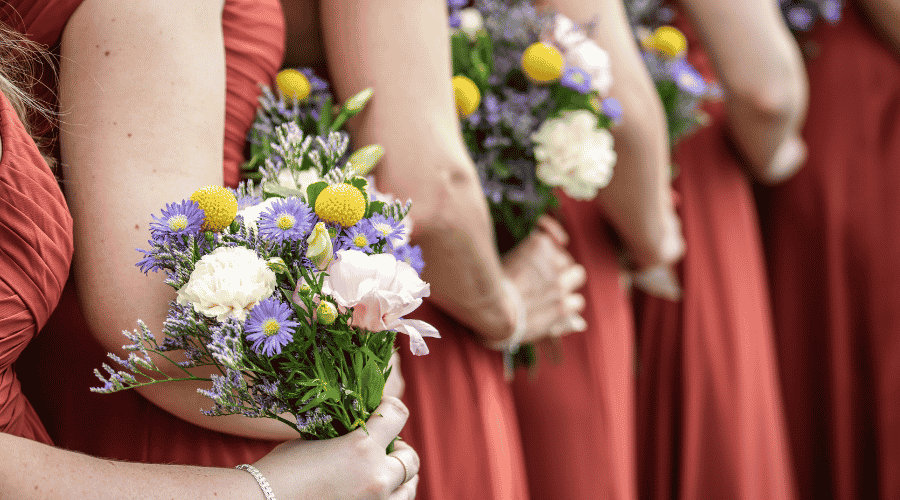
Native plants can add a distinctly Floridian character to wedding flowers. They can be especially appealing for garden, coastal, and nature-themed weddings.
Availability as cut flowers varies considerably, however. Unlike roses or carnations, many Florida natives aren’t routinely stocked by floral wholesalers. If you’d like to incorporate natives, talk with your florist well in advance. A florist may be able to work with a local grower or suggest a similar cultivated species.
Beautyberry
American beautyberry (Callicarpa americana) is one of Florida’s most distinctive native shrubs. By late summer, clusters of brilliant purple berries begin appearing along its arching stems.
Rather than serving as a traditional flower, beautyberry branches can provide color and texture in centerpieces, large arrangements, or more natural-looking bouquets. The berries are especially attractive paired with white, blush, lavender, or deep purple flowers.
Firebush
Firebush (Hamelia patens) produces clusters of slender orange-red flowers throughout Florida’s warm season. A favorite of hummingbirds and butterflies, it is particularly appropriate for a wedding with a tropical or Florida garden theme.
Its loose growth habit makes it better suited to informal arrangements than tightly structured bouquets.
Tropical Sage
Florida’s native tropical sage (Salvia coccinea) blooms in shades of red, pink, and sometimes white. Its upright flower spikes can bring an airy, wildflower quality to arrangements.
Tropical sage is particularly well suited to bud vases, garden-style centerpieces, and arrangements intended to look freshly gathered rather than highly formal.
Coreopsis
Florida didn’t choose a state wildflower without good reason. Native Coreopsis species bring cheerful yellow flowers to the landscape, and several species can be encountered blooming during the warmer months.
For weddings, coreopsis works especially well in informal wildflower arrangements and yellow-and-white color palettes. Availability will depend heavily on local growers and the particular species in bloom.
Native Sunflowers
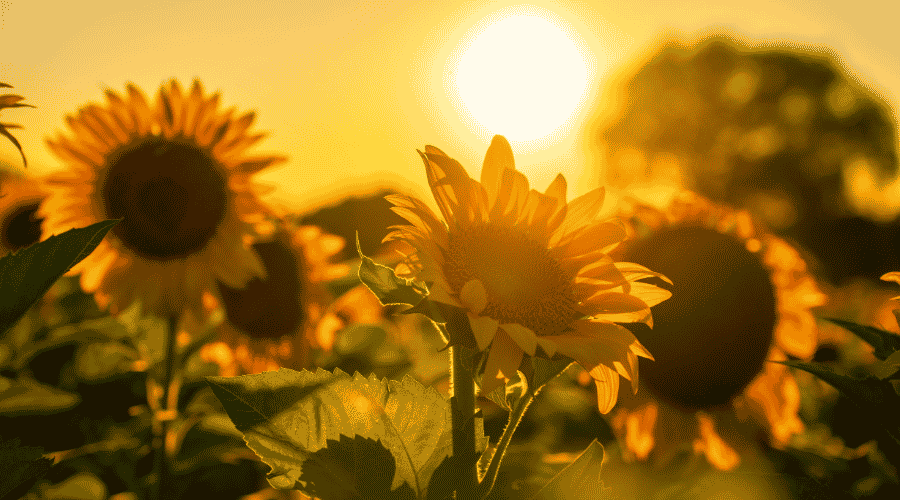
Several sunflowers are native to Florida, and late summer is an excellent time to embrace their bright, informal appearance. Depending on location and availability, native Helianthus species can provide the same cheerful effect as cultivated sunflowers while connecting the arrangements more closely to the local landscape.
Cultivated sunflowers are also readily available through the floral trade if native species aren’t practical.
Tropical Flowers Made for Florida Heat
Florida’s tropical and subtropical plants provide some of the best choices for an August wedding. Many have sturdy flowers, bold forms, and foliage that naturally looks at home in a summer setting.
Orchids
Orchids may be one of the best choices for a Florida summer wedding. Dendrobium, cymbidium, and mokara orchids are frequently used by florists and provide a polished tropical look without making an arrangement feel like a beach-themed party.
Depending on the variety, orchids are available in white, green, pink, purple, yellow, orange, and other shades. Individual blooms are also useful for boutonnieres, corsages, hair flowers, and cake decorations.
Anthuriums
With their glossy, heart-shaped spathes, anthuriums are both dramatic and remarkably well suited to tropical arrangements. Modern varieties go far beyond bright red and include white, blush, pink, green, coral, and deeper tones.
A few anthuriums can make a substantial visual impact, making them particularly effective in contemporary bouquets and centerpieces.
Ginger
Ornamental gingers offer some spectacular flowers for summer designs. Red ginger (Alpinia purpurata) creates a bold tropical statement, while other members of the ginger family provide pink, white, red, and warm-toned blooms.
These are particularly useful for larger ceremony arrangements where their size can be appreciated.
Heliconia
For a colorful tropical wedding, few flowers are as unmistakable as heliconia. Its striking red, orange, and yellow bracts are naturally suited to large arrangements and tropical foliage.
Heliconia can overwhelm a small bridal bouquet, but it can be spectacular in ceremony installations, entry arrangements, and statement centerpieces.
Bird of Paradise
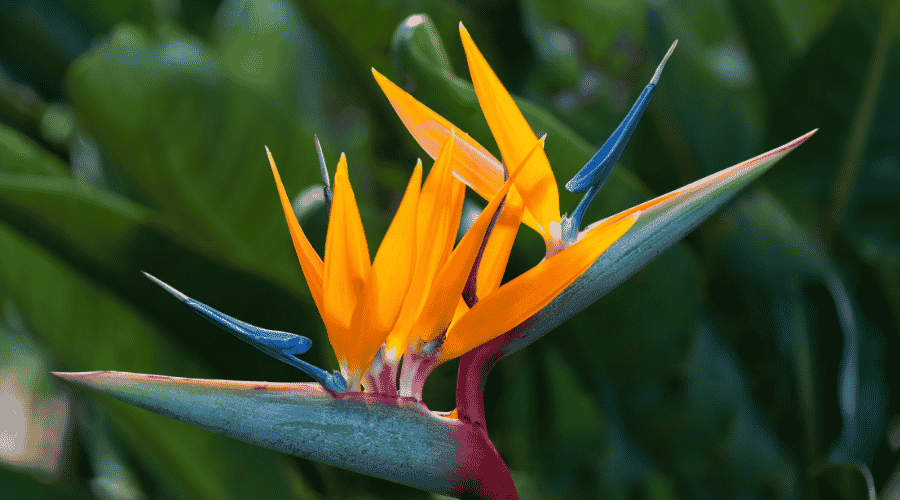
Bird of paradise (Strelitzia reginae) provides another architectural option for a tropical wedding. Its orange and blue flowers are instantly recognizable and pair beautifully with large tropical leaves.
Like heliconia, a little goes a long way.
Familiar Flowers Your Florist Is Likely to Have
You don’t need an entirely tropical bouquet just because you’re getting married in Florida. Florists have access to a much broader range of flowers through wholesalers, and several traditional wedding flowers can work beautifully in August when handled appropriately.
Roses
Roses remain one of the most versatile wedding flowers and are available year-round through the floral trade. They also come in an enormous range of colors, making them easy to incorporate into almost any wedding palette.
Standard roses, spray roses, and garden-style roses can all be used, although delicate varieties may require extra care if arrangements will spend significant time outdoors.
Carnations
Often thought of as a cheap filler flower, carnations deserve much more credit than they sometimes receive. Modern varieties come in sophisticated shades of cream, blush, peach, lavender, burgundy, and even green, and their ruffled petals can provide beautiful texture.
They’re also relatively sturdy, widely available, and useful when August heat is a concern.
Lisianthus
For the romantic appearance of a garden flower, lisianthus is an excellent choice. Its soft, layered blooms are available in white, cream, pink, lavender, purple, and other colors.
Lisianthus pairs especially well with roses and greenery and works beautifully in bouquets where you want a softer, less tropical look.
Chrysanthemums
Another sometimes-overlooked floral workhorse, chrysanthemums offer excellent variety and durability. Depending on the cultivar, they can resemble daisies, buttons, pompons, or large decorative flowers.
Their durability makes them particularly useful for summer weddings, especially in arrangements that need to remain attractive for many hours.
Alstroemeria
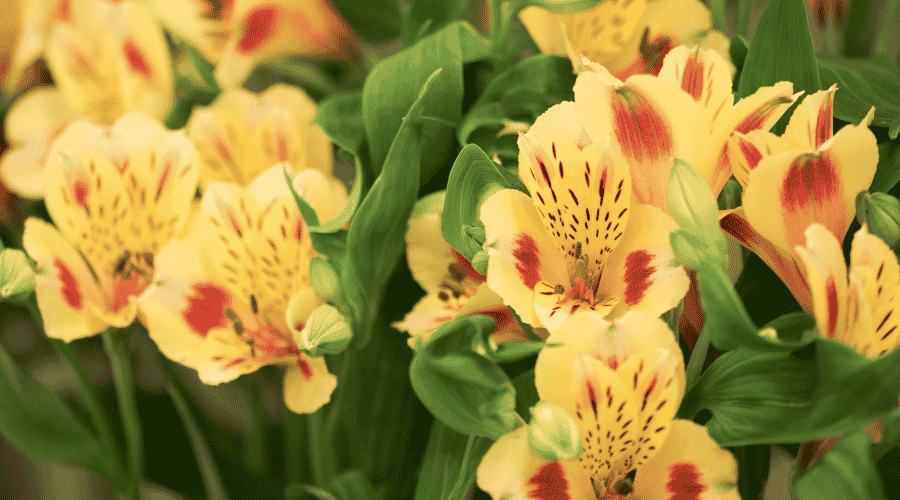
Alstroemeria provides clusters of colorful flowers and generally has excellent vase life. White, pink, peach, yellow, orange, red, and purple varieties make it adaptable to many color schemes.
It can also be an economical way to add volume and color to centerpieces.
Sunflowers
For a late-summer wedding, cultivated sunflowers are an easy way to capture a seasonal look. They work particularly well for rustic, farm, garden, and casual outdoor weddings and pair nicely with greenery and smaller yellow, white, or blue-tinted flowers.
Don’t Forget the Greenery
In Florida, foliage can be just as interesting as the flowers.
Palms, monstera, philodendron, ferns, and other tropical foliage can provide tremendous visual impact while reinforcing a sense of place. For a subtler Florida connection, ask your florist about locally grown greenery or foliage that complements the venue’s existing landscape.
Greenery can also reduce the number of flowers needed for large arrangements without making them look sparse.
A Few Flowers to Treat With Caution
August doesn’t necessarily mean you have to avoid delicate flowers, but it does mean you should think carefully about where they’ll be used.
Hydrangeas, for example, can be gorgeous wedding flowers but are notorious for wilting when they become dehydrated. Tulips are another poor match for prolonged Florida heat. Some delicate garden roses can also suffer quickly outdoors.
That doesn’t mean they’re impossible. They may work perfectly well for an indoor, air-conditioned reception or a bouquet kept in water until shortly before the ceremony. Your florist can help determine whether a favorite flower is practical for the conditions at your venue.
Plan for the Weather, Not Just the Calendar
For an August Florida wedding, where the flowers will be displayed can matter as much as what month they’re in season.
Tell your florist whether your ceremony and reception are indoors or outdoors, what time the ceremony begins, and whether arrangements will be sitting outside before guests arrive. Ask how bouquets will be kept hydrated and when large arrangements will be installed.
Shade matters, too. Even heat-tolerant flowers can deteriorate rapidly when placed in direct Florida afternoon sun.
And, of course, August is firmly within Florida’s rainy season. If you’re planning an outdoor ceremony, make sure your rain plan includes the flowers and floral installations as well as your guests.
There’s no need to force an August Florida wedding to look like a spring wedding somewhere else.
This is a month of brilliant greenery, tropical foliage, orchids, warm colors, berries, wildflowers, and exuberant growth. Whether you choose native beautyberry and wildflowers, elegant orchids and anthuriums, classic roses and lisianthus, or a combination of all of them, flowers that reflect the season can make a wedding feel much more connected to its setting.