Everything You Need to Know About Blooming Seasons, Colors, Care, Pruning, and Choosing the Right Variety
By Amanda Rose Newton
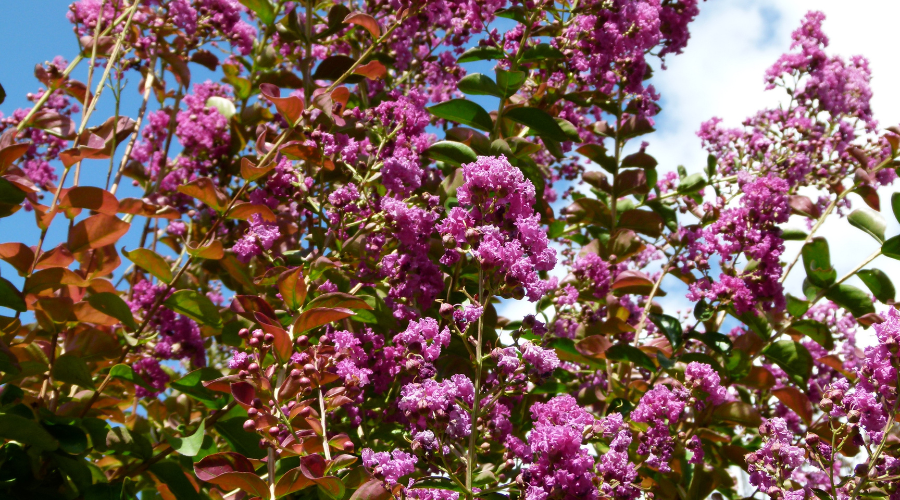
If you’ve spent any time gardening in Florida, you’ve probably admired a crape myrtle in full bloom. From brilliant white and soft pink to deep red and vibrant purple, these colorful plants provide months of summer flowers when many other landscape plants are slowing down. Add in attractive bark, colorful fall foliage, and excellent heat tolerance, and it’s easy to see why crape myrtles are among the South’s favorite landscape plants.
Despite their popularity, crape myrtles are also one of the most misunderstood plants in the landscape. One of the biggest misconceptions is that they are large shade trees. In reality, most crape myrtles are best thought of as large shrubs that take on an ornamental tree-form. Choosing the right variety and planting it in the right location will save years of unnecessary pruning and frustration.
A Quick Lagerstroemia History
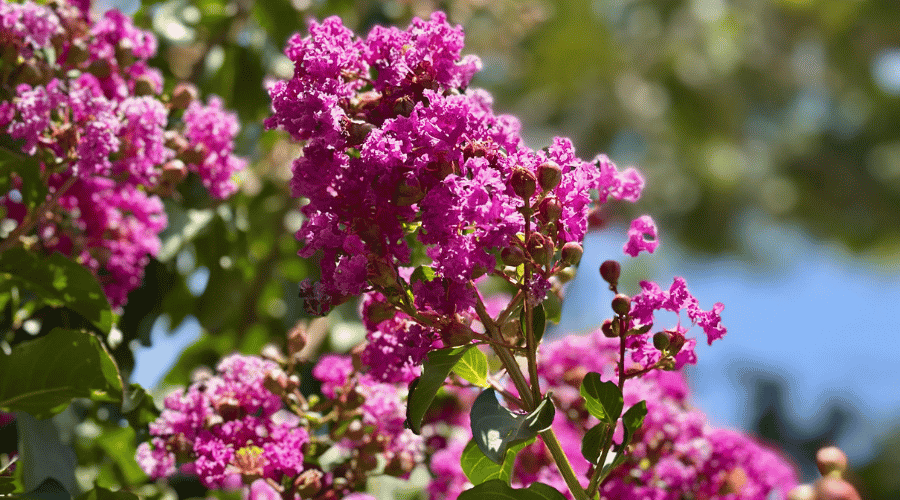
Crape myrtles (Lagerstroemia species) are native to Asia and were introduced to the United States more than 200 years ago. Since then, breeders have developed hundreds of cultivars with improved flower color, disease resistance, fun bark characteristics, and mature size.
Today, there is truly a crape myrtle for almost every landscape.
Blooming Season
One of the biggest reasons gardeners love crape myrtles is their long bloom season.
In Central Florida, flowering typically begins in late spring or early summer and continues through summer, with many varieties blooming well into September. Warm temperatures encourage repeat flowering, especially if spent blooms are lightly removed after the first full flush.
While each flower lasts only a few days, the tree continues producing new flower clusters for weeks.
A Rainbow of Colors
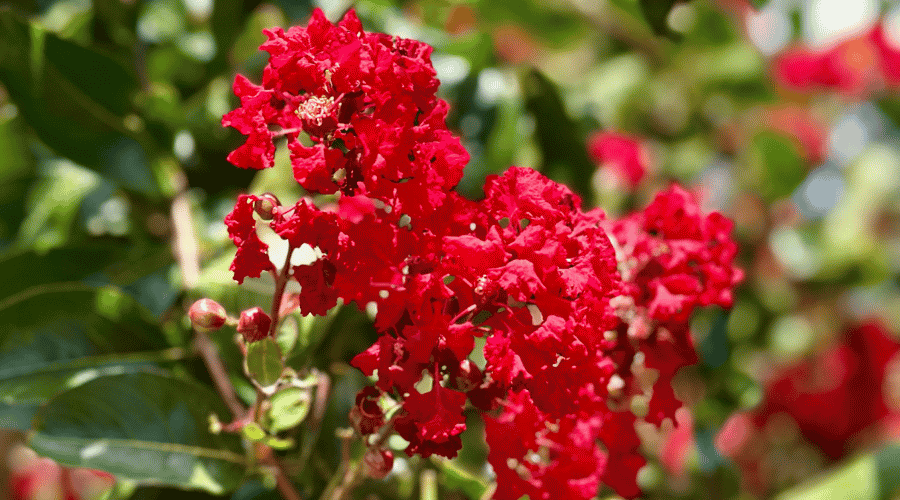
Crape myrtles are available in nearly every shade except for true blue.
Common flower colors include:
- White
- Pale pink
- Bright pink
- Lavender
- Purple
- Red
- Deep magenta
Many cultivars also produce equally attractive fall foliage in shades of yellow, orange, and red before dropping their leaves for winter.
Not All Crape Myrtles Are the Same Size
This is another common crape myrtle misconception.
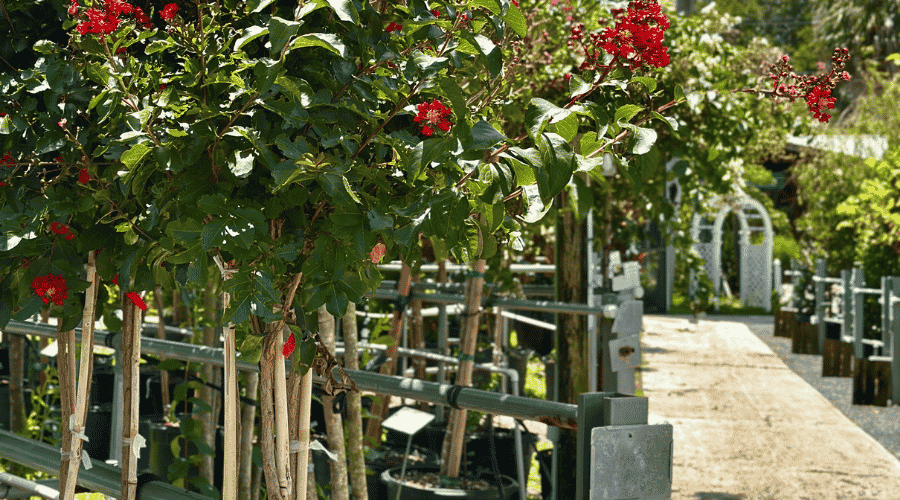
Some varieties mature at only 3 to 5 feet tall, while others can eventually exceed 25 feet!
Before purchasing one, always check the mature height rather than the height of the plant in the nursery container.
As a general guide:
Dwarf varieties (3 to 5 feet)
- Excellent for re-planting into containers
- Borders
- Foundation plantings
Intermediate varieties (8 to 15 feet)
- Accent plantings
- Courtyards
- Small patios
Large varieties (18 to 30 feet)
- Specimen plants/ focal points
- Large landscapes
- Street plantings
Choosing the correct size from the beginning means far less pruning later. No one wants more pruning later.
Popular Varieties That Perform Well
While there are hundreds of named cultivars, a few have consistently proven themselves in Florida landscapes.
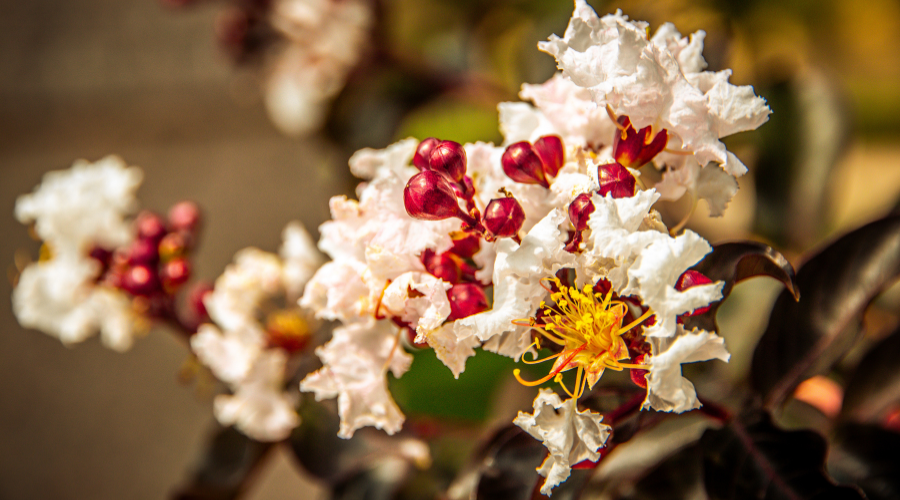
‘Natchez’
- White flowers
- Beautiful cinnamon-colored peeling bark
- Excellent disease resistance
- Large growing variety
‘Muskogee’
- Lavender flowers
- Fast growing
- Excellent summer color
- One of the most widely planted cultivars
‘Tuscarora’
- Coral-pink flowers
- Attractive bark
- Excellent heat tolerance
‘Sioux’
- Bright pink flowers
- Good powdery mildew resistance
- Reliable flowering
‘Dynamite’
- Brilliant red flowers
- Vigorous growth
- Popular for dramatic summer color
‘Acoma’
- White flowers
- Graceful, slightly weeping habit
- Smaller landscape spaces
One of the fun things about crape myrtles is their colorful cultivar names. The National Arboretum introduced many famous selections with Native American tribe names such as ‘Natchez,’ ‘Muskogee,’ ‘Sioux,’ ‘Tuscarora,’ and ‘Arapaho.’ More recent introductions include memorable names like ‘Dynamite,’ ‘Red Rocket,’ and ‘Pink Velour.’
Growing Conditions
Crape myrtles perform best with:
- Full sun (at least six hours daily)
- Well-drained soil
- Moderate watering during establishment
- Good air circulation
Once established, they are remarkably drought tolerant.
Too much shade often results in fewer flowers and increased disease problems.
Pruning: Less Is More
Perhaps no landscape plant creates more confusion regarding how to prune than the crape myrtle.
Many people believe they should be cut back dramatically every winter. This practice has become so common that gardeners have given it a nickname: “crape murder.”
Fortunately, healthy crape myrtles rarely need severe pruning.
Instead:
- Remove dead, damaged, or crossing branches.
- Remove small suckers growing from the base if you prefer a tree form.
- Lightly thin crowded branches to improve air circulation.
- Allow the plant to develop its natural shape.
Heavy topping produces weak, fast-growing shoots, delays flowering, and often creates an unattractive appearance.
The best pruning is usually the least pruning.
Is a Crape Myrtle Right for Your Front Yard?
Only Sometimes.
Because many varieties grow much larger than expected, they are not always the best choice for a small front yard or a planting bed close to the house.
Before planting, ask yourself:
- How tall will this variety become?
- How wide will it spread?
- Will it eventually interfere with sidewalks, roofs, or windows?
In many cases, selecting a naturally smaller cultivar is a much better long-term solution than planning to prune a large one every year.
Also, keep in mind that a crape myrtle is truly deciduous and will be “naked” throughout the winter months.
Common Problems
Fortunately, modern cultivars have improved resistance to many common diseases.
Occasionally you may encounter:
- Powdery mildew
- Aphids
- Sooty mold (caused by aphid honeydew)
- Crape myrtle bark scale
Choosing resistant varieties, planting in full sun, and maintaining good airflow can prevent many of these issues.
There is a reason crape myrtles have remained one of the South’s favorite landscape plants for generations. They provide months of colorful blooms, attractive bark, dependable performance, and relatively easy care. With so many cultivars available, you can choose the crape myrtle that suits the theme of your landscape perfectly.
The key to success is choosing the right variety for the right location. Rather than trying to force a large-growing crape myrtle into a small space with heavy pruning, select a cultivar that naturally fits your landscape. Your plant will be healthier, your maintenance will be lower, and you’ll enjoy beautiful blooms for years to come.