By Amanda Rose Newton
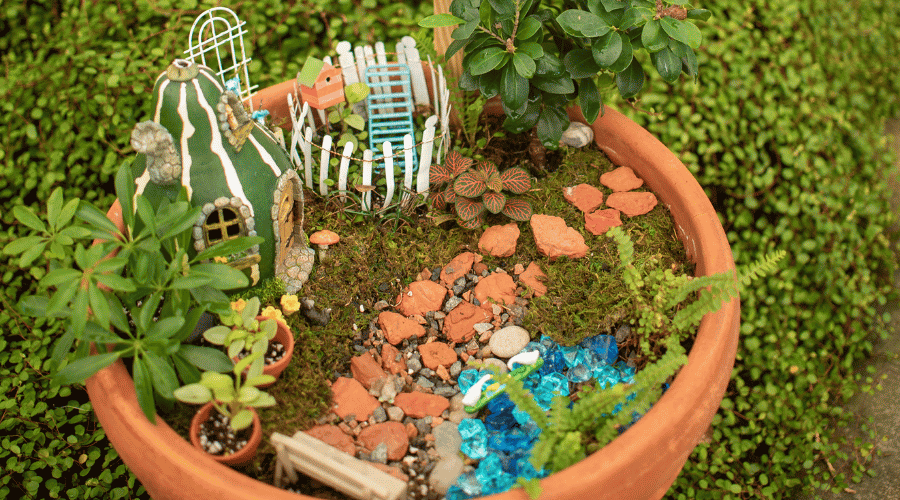
There is something undeniably magical about discovering a tiny door tucked beneath a fern, a miniature bench hidden under creeping moss, or a winding pebble path disappearing into the roots of a tree. Fairy gardens have become increasingly popular over the years, especially in spring when gardeners begin refreshing beds, patios, and containers for the growing season. But the idea of tiny mystical beings living among the flowers is far older than the trend itself.
Fairy gardens are rooted in centuries of folklore, nature traditions, and humanity’s long relationship with the natural world. While today they are often whimsical decorations filled with miniature houses and tiny accessories, the history behind them reveals a fascinating blend of mythology, superstition, and a deep appreciation for hidden places in nature.
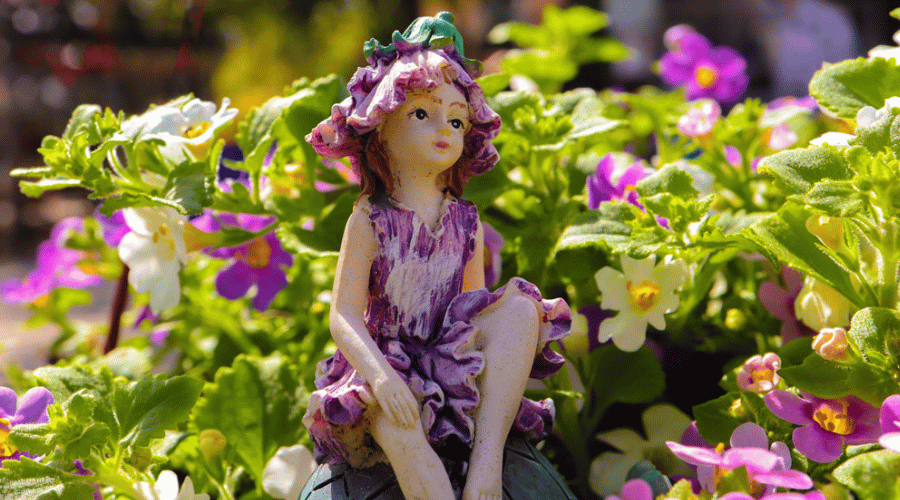
Why Are Fairies Associated with Gardens?
Stories of fairies, fae, and nature spirits appear throughout European folklore, particularly in Celtic, Irish, Scottish, and English traditions. Many of the earliest written references to fairy-like beings date back to the early medieval period (roughly 500-1200 CE), though many of the stories themselves are likely much older and were passed down orally long before they were written.
These beings were often believed to inhabit forests, springs, old trees, mushrooms, and secluded meadows. In many tales, fairies acted as guardians of nature or mischievous spirits connected to the changing seasons and fertility of the land.
Spring became especially associated with fairies because it represented rebirth, blooming flowers, and the return of life after winter. Ancient spring festivals connected to planting and fertility, including celebrations tied to Beltane traditions in Celtic regions (celebrated for over 1,000 years and formally recorded during the medieval period), often blended with folklore about unseen creatures awakening alongside the garden.
During the Victorian era (1837-1901), fascination with fairies exploded in popularity throughout Europe and later the United States. Fairy imagery became common in paintings, gardens, literature, and decorative arts. This period heavily shaped the whimsical fairy aesthetic many people recognize today.
Certain natural features were thought to attract fairies:
- Mossy stones
- Fern-covered areas
- Mushroom rings (“fairy rings”)
- Flowering herbs
- Hollow tree trunks
- Tiny hidden pathways
Even today, fairy gardens tap into that same sense of wonder. They encourage gardeners to slow down, notice details, and create spaces that feel tucked away and enchanting.
Why Fairy Gardens Became So Popular
Modern fairy gardens likely grew out of several traditions:
- Victorian miniature gardening (mid-to-late 1800s)
- Dish gardens and terrariums (popularized in the 1800s)
- Cottage garden aesthetics
- Children’s literature and fantasy stories from the late 19th and early 20th centuries
- The resurgence of whimsical outdoor decor during the late 20th and early 21st centuries
Part of their appeal is that they combine gardening with storytelling. A fairy garden does not have to be perfectly manicured. In fact, the slightly wild, overgrown look often feels the most magical.
They are also accessible for nearly any gardener, no matter how experienced. Fairy gardens can be:
- Large landscape features
- Small container gardens
- Terrariums
- Tree-base plantings
- Patio displays
- Indoor gardens
For Florida gardeners, fairy gardens work particularly well because our long growing season allows for lush foliage and miniature landscapes nearly year-round.
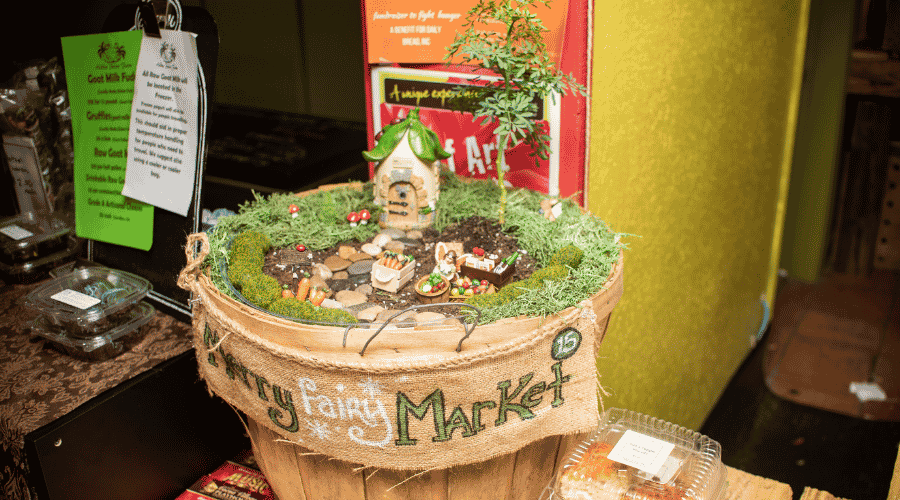
The Best Spots for a Fairy Garden in Florida
The ideal fairy garden location often mimics the hidden woodland settings associated with folklore.
Good locations include:
- Beneath trees
- Around shaded patios
- Near water features
- Along garden pathways
- At the base of large palms or oaks
- In containers on porches
- Tucked into partially shaded flower beds
Because Florida sun can be intense, many fairy garden plants perform best in bright shade or morning sun rather than full afternoon exposure.
Moist but well-drained soil is ideal for creating the lush, layered look most people associate with fairy gardens.
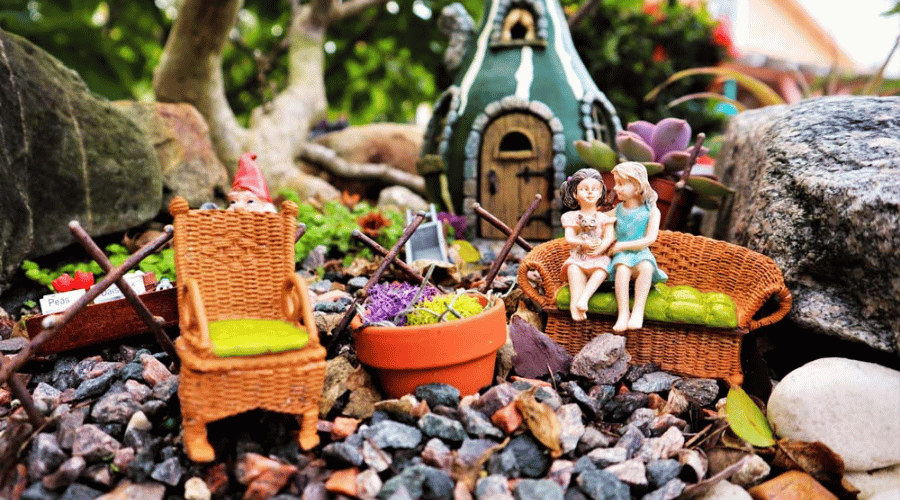
The Best Florida-Friendly Plants for Fairy Gardens
Mosses
Nothing creates an ancient woodland feel quite like moss. In Florida’s humid climate, moss can thrive in shaded, moist areas and instantly gives a fairy garden an aged appearance.
Ferns
Small or delicate ferns are classic fairy garden plants. They create soft textures and mimic miniature forests.
Good options include:
- Rabbit’s foot fern
- Lemon button fern
- Maidenhair fern
- Holly fern
Creeping Fig
This tiny-leaved vine works beautifully creeping over stones, containers, and miniature structures.
Baby Tears
Baby tears form a soft carpet of tiny leaves perfect for miniature pathways and fairy “lawns.”
Irish Moss
Though not a true moss, it creates a lush green mat that works beautifully in containers and partially shaded spaces.
Peperomia
Many peperomia species stay naturally compact and tolerate Florida humidity very well.
Miniature Palms and Tropical Plants
Small tropical foliage plants can give Florida fairy gardens a distinctly local feel.
Try:
- Parlor palm
- Dwarf mondo grass
- Mini bromeliads
- Small calatheas
Succulents for Sunny Fairy Gardens
Not all fairy gardens have to have a woodland forest theme! For brighter areas, fairy gardens can take on a desert-fantasy feel using:
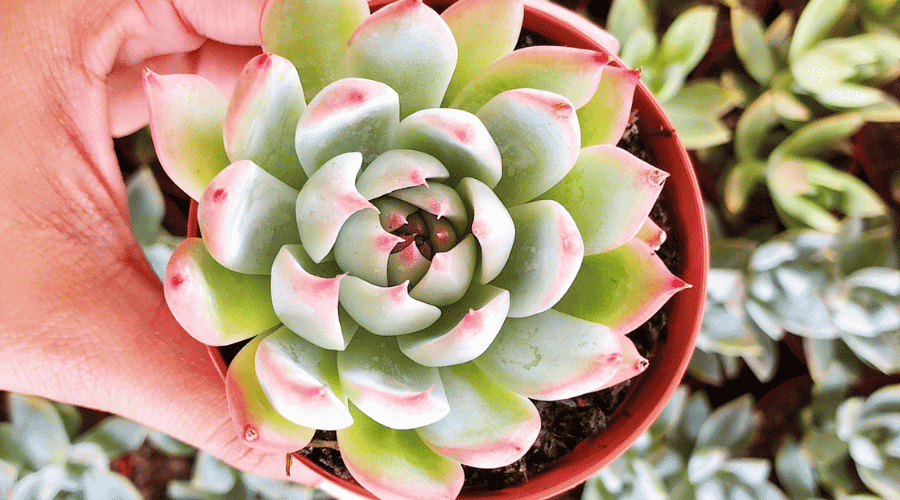
- Echeveria
- Sedum
- Haworthia
- Dwarf jade
These work especially well in containers where drainage can be controlled.
Adding the “Fairy” Feel
The plants themselves are often only part of the charm. Texture and scale help create the illusion of a tiny hidden world.
Popular additions include:
- Pebble pathways
- Tiny bridges
- Miniature doors
- Acorn “lanterns”
- Driftwood
- Seashells
- Small birdhouses
- Crystals or polished stones
- Mini benches or swings
Natural materials often look more convincing than brightly colored plastic decorations and blend more seamlessly into Florida landscapes.
Fairy Gardens and Pollinators
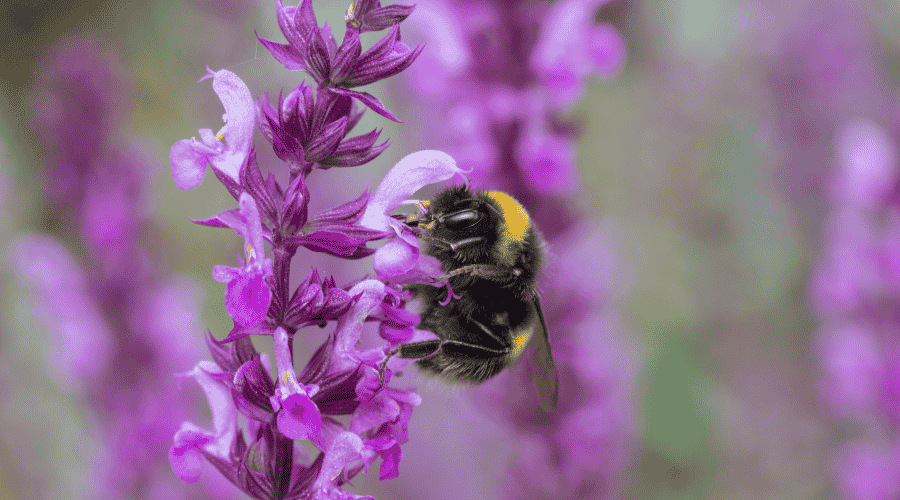
Interestingly, many plants commonly used in fairy gardens also benefit real-life garden visitors. Tiny flowering plants, herbs, and sheltered spaces can support:
- Butterflies
- Native bees
- Small lizards
- Tree frogs + Toads
- Beneficial insects
Adding plants like thyme, alyssum, dwarf pentas, or small salvias can create a fairy garden that is both magical and ecologically beneficial.
Perhaps the enduring appeal of fairy gardens is that they invite imagination back into gardening. They encourage curiosity, creativity, and the simple joy of creating something beautiful on a tiny scale.
In a fast-paced world, there is something refreshing about building a hidden corner of the garden that feels whimsical, peaceful, and just a little enchanted.
After all, if fairies were real, Florida’s lush spring gardens would probably be exactly where they would want to live.