By Amanda Rose Newton
If you spend time online looking at gardening content, you’ve probably seen plants that look almost too extraordinary to be real. Rainbow roses, glowing flowers, perfectly symmetrical variegation, or colors so intense they look backlit.
Some images are edited. Increasingly, many are completely AI-generated. And while they’re fun to look at, they can create confusion about what plants actually look like and how they grow. This is also true for garden-adjacent creatures such as insects and hummingbirds.
Here’s how to tell the difference and a little of the science behind why real plants look the way they do.
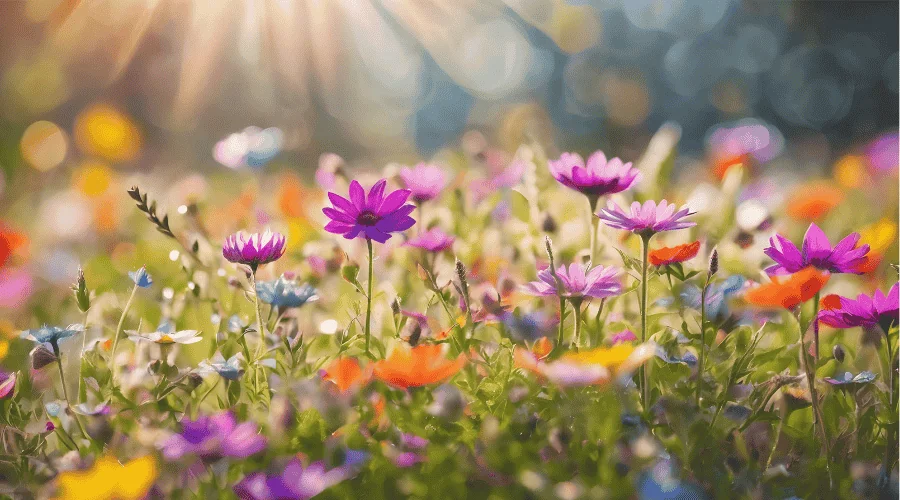
Color: What Plants Can (and Can’t) Make
Plants produce color using a relatively small group of pigments:
Chlorophyll – green
Carotenoids – yellow, orange
Anthocyanins – red, pink, purple, some blues
Betalains – red and yellow pigments in certain plant families
These pigments place limits on color. For example:
- True bright cobalt-blue roses do not exist naturally.
- Neon or glowing pigments are extremely rare in plants.
- Metallic or chrome effects are not biologically produced.
Real flower colors usually have:
- Subtle gradients
- Slight irregularities
- Natural light absorption rather than glowing intensity
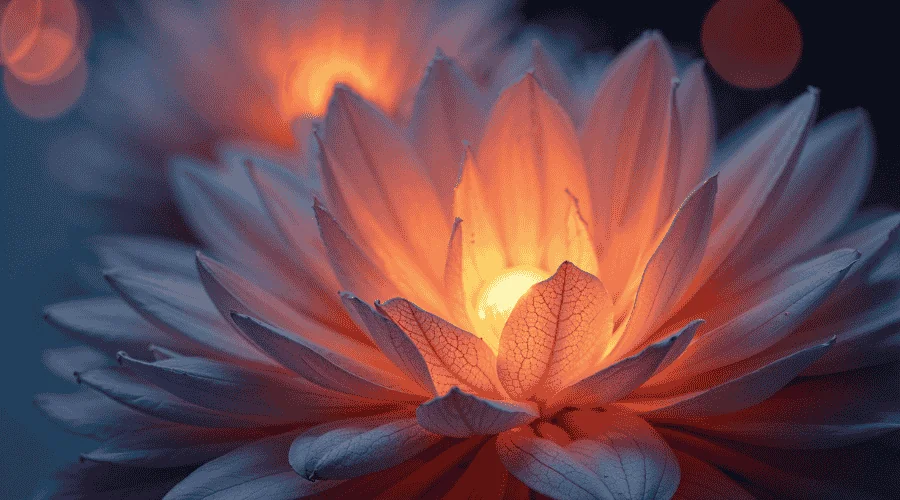
If a flower looks like it’s lit from within, it’s usually artificial or digitally created.
Are There Bioluminescent Plants?
Interestingly, there are plants that glow! However, almost none occur naturally in flowers.
Bioluminescence in nature is far more common in:
- Fungi
- Marine organisms
- Some insects
However, scientists have created genetically engineered glowing plants by inserting genes from bioluminescent fungi or bacteria. These plants:
- Glow faintly in low light
- Usually appears greenish
- Do not produce bright neon blooms
Companies and research groups have successfully produced glowing petunias and other bedding plants, but the glow is subtle. Nothing like the dramatic, brightly glowing flowers often seen online.
So if you see a vividly glowing rose or sunflower, that image is almost certainly AI or heavily edited.
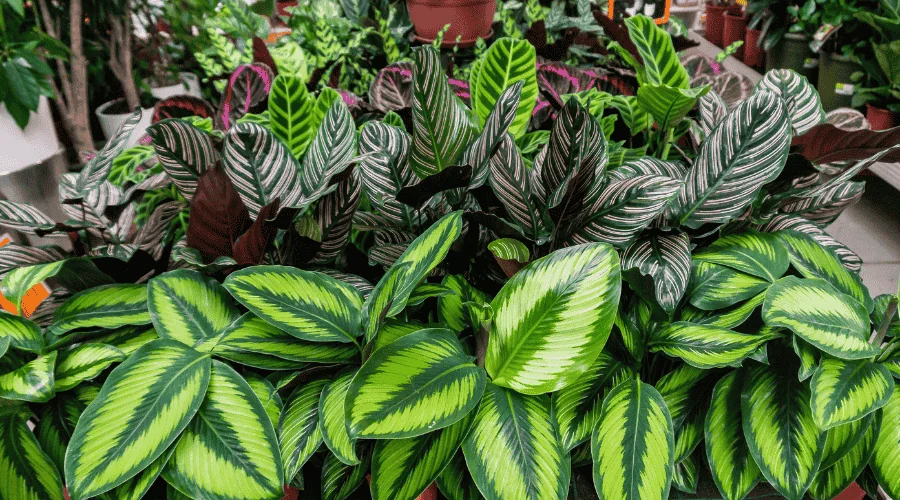
Why Variegation Happens (and Why It’s Irregular)
Variegation, the presence of multiple colors in leaves, is one of the most misunderstood plant traits.
It can occur due to:
Chimeral variegation
Different genetic cell layers produce different pigments.
Lack of chlorophyll in some tissues
White or cream areas lack chlorophyll.
Viral variegation
Some patterns result from plant viruses altering pigment production.
Nutrient or environmental effects
Less stable, often temporary.
Because variegation arises from irregular cell division or genetic layering, real variegation tends to be:
- Uneven
- Variable from leaf to leaf
- Sometimes unstable (plants revert to green)
AI-generated plants often show:
- Identical patterns on every leaf
- Perfect symmetry
- Decorative, swirly patterns that repeat like wallpaper
Nature rarely repeats itself that precisely.
Flower Structure Follows Biological Rules
Flowers aren’t randomly assembled shapes. They follow developmental patterns controlled by genetics.
Most flowers follow predictable merosity (number of parts):
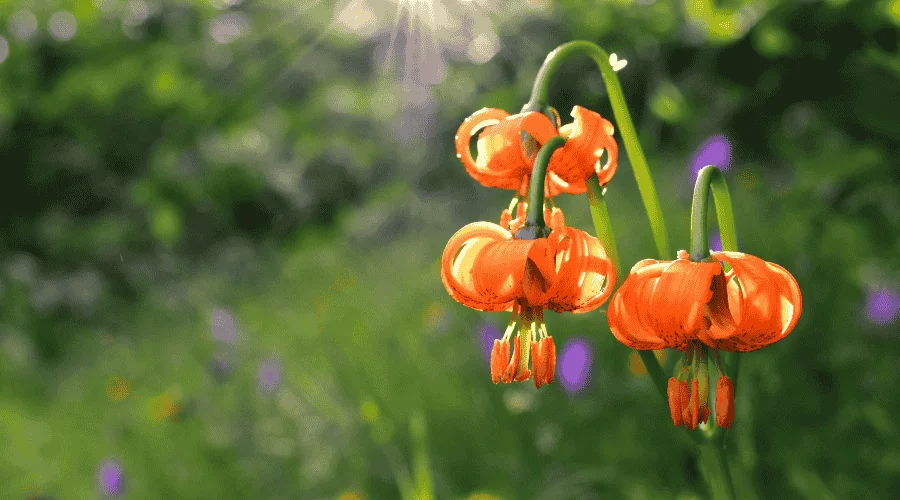
- Monocots (lilies, orchids): parts in multiples of three
- Dicots (roses, hibiscus): parts in multiples of four or five
Flowers also follow patterns of symmetry:
- Radial symmetry (daisy, rose)
- Bilateral symmetry (orchids, snapdragons)
AI images often show:
- Petals in unusual numbers with no pattern
- Mixed symmetry
- Petals emerging from impossible points
Real flowers may be unusual, but they remain orderly at the structural level.
Growth Habit and Physics Still Apply
Plants obey physical limits:
- Stems must support the weight of flowers
- Leaves must attach at nodes
- Vascular systems limit how large blooms can be
AI images sometimes show:
- Massive blooms on threadlike stems
- Leaves attached in impossible ways
- Flowers growing directly from leaves or mid-stem tissue
These are subtle clues that something isn’t biologically plausible.
Repetition Is Rare in Nature
AI frequently duplicates shapes or patterns.
Look closely at:
- Leaves that are identical copies
- Petals with exactly the same folds
- Background plants repeating like tiles
Real plants always show small variations, even in highly symmetrical species.
Background Clues
Sometimes the plant looks convincing, but:
- Pots melt into surfaces
- Labels contain distorted text
- Soil texture looks painted
- Shadows fall in different directions
These visual inconsistencies are common in AI-generated images.
Why This Matters
AI images are fun, but they can:
- Mislead new gardeners
- Create unrealistic expectations
- Lead people to search for plants and seeds that don’t exist
Understanding what real plants look like helps people appreciate them more and succeed as gardeners.
Plants That Look Fake but Are Actually Real
Nature doesn’t need AI to be strange. Here are some real plants that often get mistaken for being artificial:
Bat Flower (Tacca chantrieri)
Looks like a bat with long whiskers; an entirely real tropical plant.
Jade Vine (Strongylodon macrobotrys)
Produces hanging clusters of turquoise flowers. One of the rare true blue-green pigments in nature.
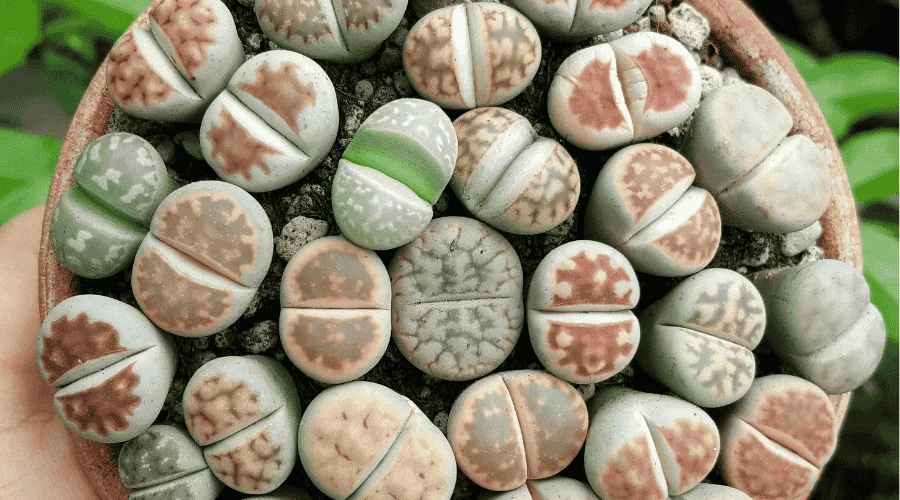
Lithops (“Living Stones”)
Succulents that look exactly like pebbles as camouflage.
Black Bat Lily and Black Petunias
Very dark purple pigments can appear nearly black.
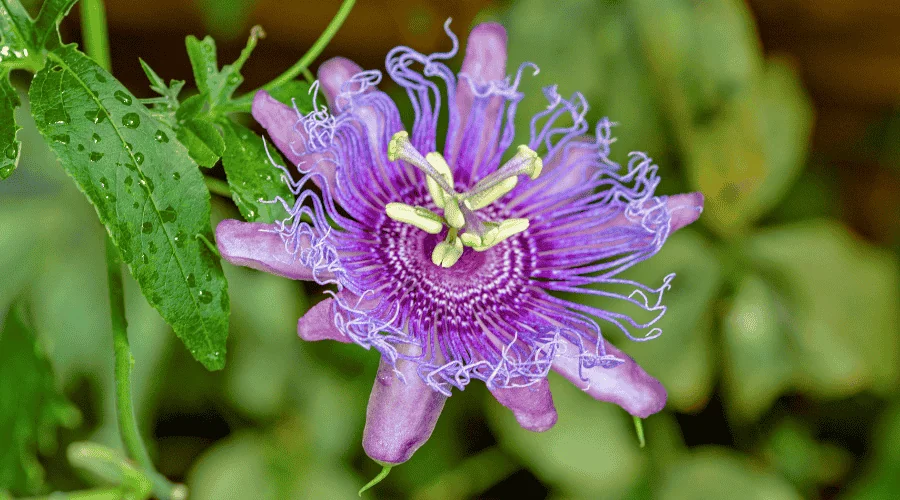
Passionflowers (Passiflora spp.)
Intricate floral structures that look almost mechanical.
Orchids
Some species look like insects, birds, or faces. Pollination mimicry drives extraordinary shapes.
Real plants are rarely perfect.
Leaves twist, petals vary, and colors shift in different light.
Those imperfections are often the most reliable sign that what you’re looking at is real—and alive.