By Amanda Rose Newton
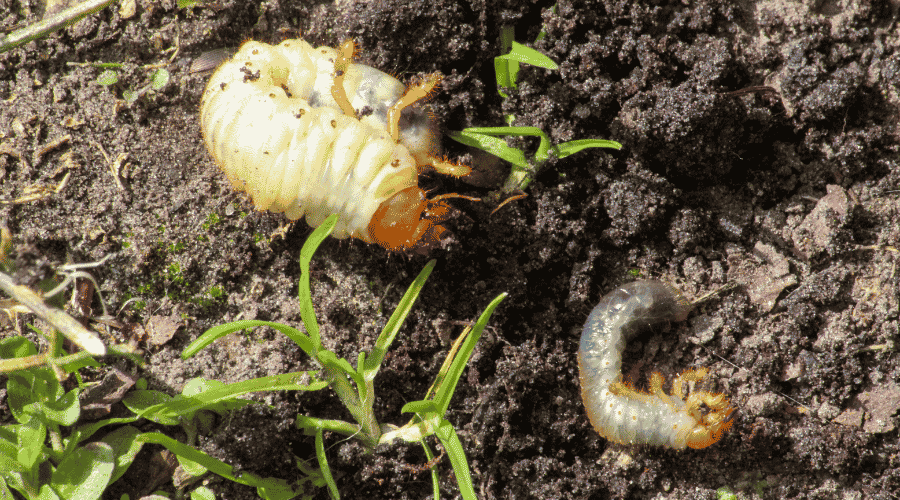
If you’ve ever pulled back a patch of dead turf and found several plump, white, C-shaped larvae underneath, you’ve met one of Florida’s most common lawn pests: the lawn grub.
While they may look alien at first glance, lawn grubs are actually the immature stage of beetles, many of which you have probably seen flying around your porch lights on summer evenings. Understanding what they are, when they become a problem, and how to manage them can help you protect your lawn without unnecessary treatments.
What Exactly Is a Lawn Grub?
Lawn grubs are the larval stage of scarab beetles. Scarab beetles as in the prized beetles as seen in the Aladdin movies and desired throughout history for their beauty. Scarabs are a large family of beetles that includes June beetles, June bugs, Japanese beetles, chafers, flower chafers, dung beetles, and many other familiar species.
The white grubs found in Central Florida lawns are most commonly the larvae of June beetles, masked chafers, and other native scarab beetles. They spend most of their lives underground as less spectacular grubs before emerging as striking adult beetles.
Grubs have a distinctive appearance:
- Creamy white body
- Brown head capsule
- Six small legs near the head
- Curled into a “C” shape when disturbed
Although many people find them unsettling, it helps to remember that these are simply baby beetles. In fact, some of the adult scarabs found in Florida are quite beautiful.
Not All Scarab Beetles Are Lawn Pests
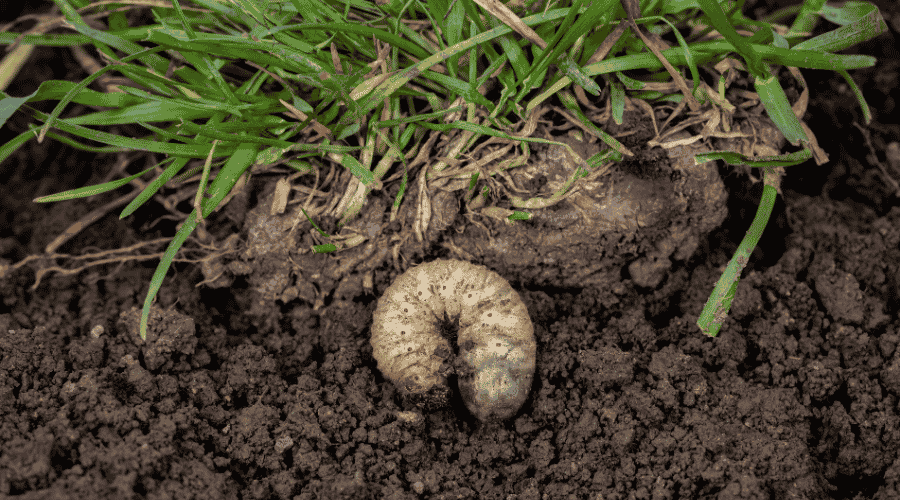
When people hear the word “grub,” they often think of a destructive lawn pest. In reality, lawn grubs are simply one life stage of scarab beetles, a diverse group that includes both pests and beneficial insects.
While some scarab larvae can damage turfgrass roots, many species help recycle nutrients, break down organic matter, and contribute to healthy ecosystems.
June Beetles and June Bugs
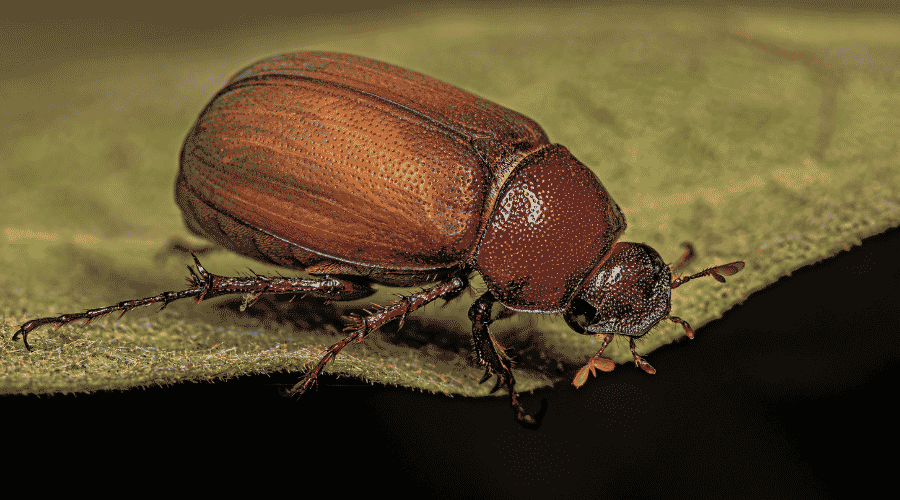
The most common lawn grubs in Central Florida are the larvae of June beetles, often called June bugs. Adult beetles emerge on warm evenings and are frequently attracted to lights around homes and businesses.
Their larvae spend months underground feeding on roots before eventually transforming into the familiar adult beetles.
Green June Beetles
One of Florida’s most attractive scarabs is the Green June Beetle. Adults are metallic green with bronze and gold highlights and are often seen flying through gardens during the summer.
Unlike many lawn-damaging grubs, Green June Beetle larvae typically feed on compost, thatch, and decaying organic matter. In moderate numbers, they can help recycle nutrients and contribute to decomposition.
Flower Chafers
Flower chafers are another group of scarab beetles that gardeners may encounter. Adult flower chafers are often found visiting flowers where they feed on pollen and nectar.
Some species may occasionally feed on flowers or overripe fruit, but they can also contribute to pollination. Their larvae are commonly found in compost, mulch, leaf litter, and decaying wood rather than actively feeding on healthy lawn roots.
Rainbow Dung Beetles: Nature’s Cleanup Crew
Perhaps the most spectacular scarab found in Florida is the Rainbow Scarab, commonly known as the rainbow dung beetle.
With brilliant metallic colors that can appear green, blue, copper, gold, or purple depending on the light, these beetles look more like living gemstones than insects. Males possess a prominent horn that they use to compete for mates.
Despite their beautiful appearance, rainbow dung beetles perform one of nature’s most important cleanup jobs. They bury and recycle animal manure by pulling it underground and incorporating it into the soil.
This activity helps:
- Improve soil aeration
- Return nutrients to the soil
- Reduce fly breeding sites
- Help suppress livestock parasites
- Increase water infiltration
A healthy population of dung beetles can process surprising amounts of manure each year, making them valuable allies for farms, ranches, and natural ecosystems.
Garden Bug Fun Fact: Florida’s “Jewel Beetle” Is a Dung Beetle
The rainbow dung beetle is often mistaken for an exotic tropical insect, but it is native to much of the eastern United States, including Florida. Its stunning metallic colors come from microscopic structures in its exoskeleton that reflect light, creating iridescent colors similar to those seen in butterfly wings and peacock feathers.
A Few Grubs Are Normal
Because scarab beetles include both pests and beneficial species, finding an occasional white grub in your soil is not necessarily a cause for alarm. Most healthy lawns contain a few grubs every year without experiencing noticeable damage.
The goal is not to eliminate every grub but to prevent populations of root-feeding species from reaching levels that harm your turf.
The Life Cycle of Lawn Grubs
Understanding the life cycle helps explain why grub damage often seems to appear suddenly.
- Adult beetles emerge and mate.
- Females lay eggs in the soil of lawns and grassy areas.
- Eggs hatch into grubs.
- Grubs feed on grass roots for several months.
- Mature grubs pupate in the soil.
- New adult beetles emerge and begin the cycle again.
Most damage occurs during the feeding stage when the larvae are actively consuming roots beneath your turf.
What Damage Do Grubs Cause?
Healthy lawns can tolerate a small number of grubs without noticeable problems. Issues arise when populations become high.
As grubs feed, they chew on grass roots, reducing the lawn’s ability to absorb water and nutrients.
Common symptoms include:
- Irregular brown patches
- Thinning turf
- Wilting despite adequate irrigation
- Grass that feels spongy underfoot
- Turf that can be rolled back like a carpet
Because the roots have been damaged, affected grass often pulls up easily.
Sometimes the Animals Cause More Damage Than the Grubs
Interestingly, the most obvious lawn destruction is not always caused directly by the grubs.
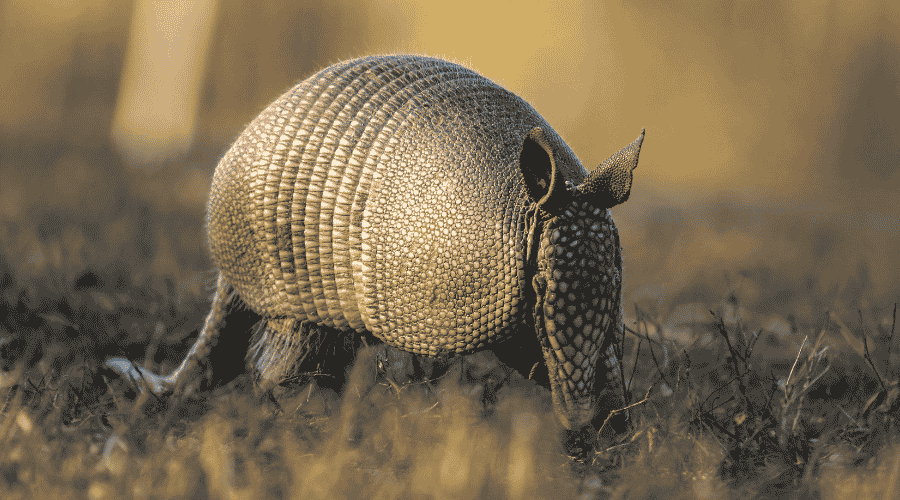
Many animals love to eat them, including:
- Armadillos
- Raccoons
- Moles
- Skunks where present
- Birds such as crows and the always present ibis
If you wake up to numerous holes scattered across your yard, the culprit may actually be a hungry animal searching for grubs beneath the surface.
How to Check for Grubs
Before treating, confirm that grubs are actually present.
Cut three sides of a one-square-foot section of turf and fold it back.
Look for:
- White, C-shaped larvae
- Root damage
- Multiple grubs concentrated in one area
Finding a few grubs is normal and usually does not require treatment. Large numbers combined with visible turf damage may justify management efforts.
Prevention Is Easier Than Cure
A healthy lawn is naturally more resistant to grub damage.
Good cultural practices include:
Mow Properly
Avoid mowing too short. Grass maintained at the proper height develops deeper roots and tolerates stress better.
Water Correctly
Deep, infrequent irrigation encourages stronger root systems.
Avoid Excess Fertilizer
Overfertilized lawns can sometimes attract egg-laying beetles and produce lush growth that masks early signs of damage.
Maintain Soil Health
Healthy soils support beneficial organisms that help naturally suppress pests.
Natural and Biological Controls
Many homeowners prefer starting with lower-impact options.
Beneficial Nematodes
Beneficial nematodes are microscopic worms that seek out and kill soil-dwelling insect larvae, including grubs.
For best results:
- Apply to moist soil
- Water before and after application
- Apply during cooler parts of the day
- Follow storage instructions carefully
Encourage Natural Predators
Birds, toads, and other wildlife can help reduce grub populations naturally.
While you may not want armadillos digging up the yard, a healthy ecosystem often provides some level of pest suppression.
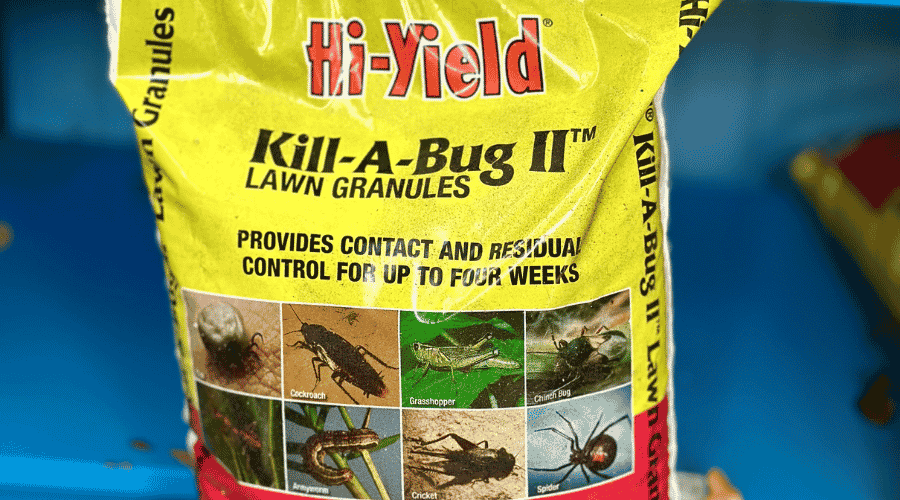
Chemical Control Options
When grub populations are severe, insecticides may be warranted.
Products labeled for grub control are generally most effective when applied against young, actively feeding larvae rather than large mature grubs.
Always:
- Read and follow label directions.
- Confirm the product is labeled for turfgrass grub control.
- Apply at the recommended timing.
- Water in if directed by the label.
Treatments applied at the wrong time of year often provide disappointing results because the grubs are either too large or not actively feeding.
Should You Always Treat Grubs?
Not necessarily.
Many Florida lawns contain low levels of grubs every year without suffering noticeable damage. Finding a few larvae while gardening or planting is completely normal.
Treatment is usually only necessary when:
- Significant turf damage is present
- Grub numbers are extremely high
- Animals are repeatedly tearing up the lawn looking for a snack
- Root damage is affecting lawn recovery
In many cases, improving lawn health and monitoring populations can be more effective than routine insecticide applications.
Most lawns can tolerate small numbers of these insects without issue. The key is knowing the difference between a normal part of your lawn ecosystem and a true infestation. By regularly inspecting your turf, maintaining healthy grass, and using targeted controls only when needed, you can keep your lawn healthy while minimizing unnecessary treatments.
The next time you uncover one of those white, C-shaped larvae, remember that you are looking at a baby beetle, not a mysterious lawn monster. Understanding its life cycle and role in the ecosystem is the first step toward effective grub management in Central Florida.