By Amanda Rose Newton
Florida is known for citrus, mangoes, and avocados, but apples have a surprisingly interesting place in the Sunshine State’s horticultural history. While most apples prefer the cold winters of northern orchards, a handful of varieties have found their way into warmer climates through plant breeding, careful selection, and a few fortunate discoveries.
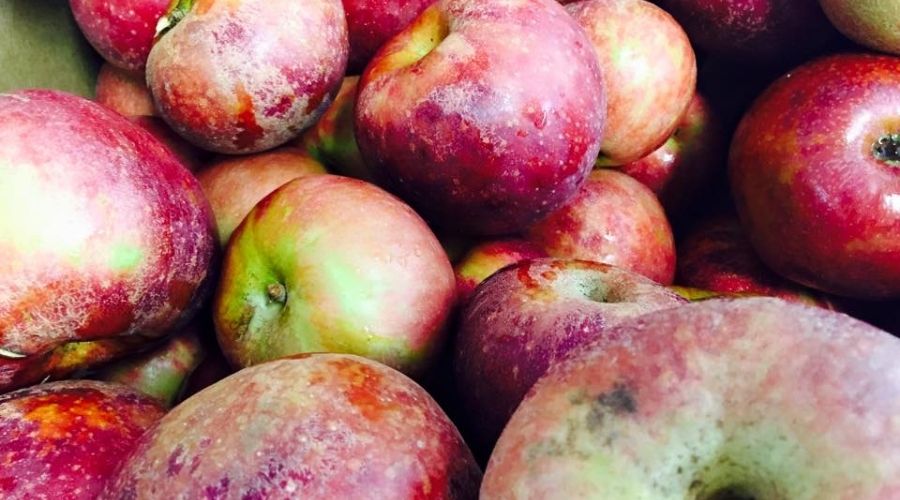
Their story stretches from Central Asia to Israel, the Bahamas, and eventually Florida. Along the way, it reveals something fascinating about plant physiology and why growing an apple tree isn’t necessarily the same as growing apples.
An Apple’s Journey to Warmer Climates
Apples have been cultivated for thousands of years, beginning with wild ancestors in Central Asia. As people carried them across continents, growers selected trees for flavor, appearance, and productivity. Over generations, apples became closely associated with regions that experience distinct winters and growing seasons.
But some apple trees had a useful genetic advantage: they needed less winter chilling than others.
In the 1950s, breeders in Israel were working to develop apples suited to warmer growing conditions. Their efforts produced Anna, a variety capable of completing its winter chilling requirements with considerably less cold exposure than traditional northern apples.
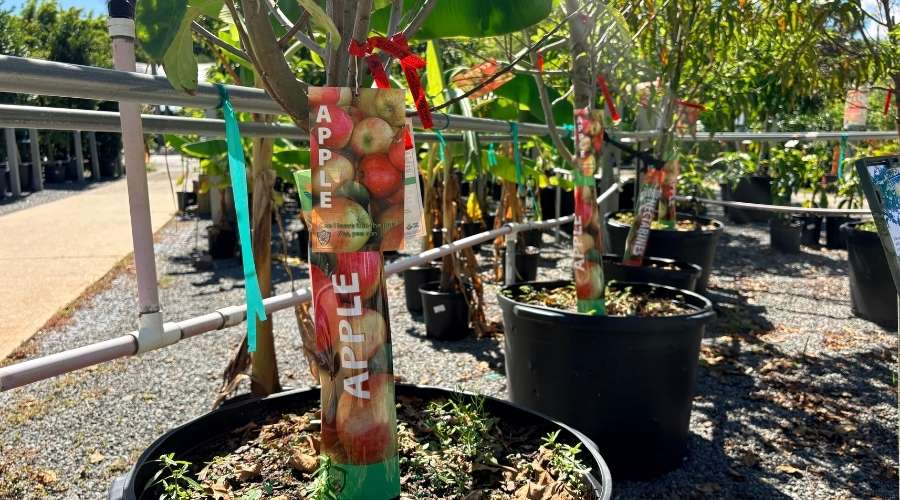
Meanwhile, across the world in Nassau, Bahamas, an unusual apple tree was attracting attention for producing fruit in a tropical environment. This tree became the source of Dorsett Golden, another variety with a remarkably low chilling requirement.
What made these apples so interesting wasn’t simply that they could survive in warmer climates. It was that they could actually produce fruit there.
Florida researchers eventually built on this progress. The University of Florida developed TropicSweet, using Anna in its breeding background to combine adaptation to mild winters with desirable fruit characteristics.
Together, these varieties expanded the possibilities for growing apples beyond traditional northern orchards. But their success depended on an important piece of plant physiology.
Why Even Florida Apples Need a Little Winter
Apple trees are deciduous, naturally shedding their leaves and entering dormancy as part of their seasonal cycle. Dormancy helps prevent buds from growing at the wrong time, but it isn’t simply a reaction to cold weather.
During part of dormancy, buds are held in a resting state by internal processes. Exposure to enough cool temperatures helps release that restriction. Once the chilling requirement is met, the buds can respond to warmer weather and begin growing again.
This is where chill hours come in.
Different apple varieties require different amounts of winter chilling to resume normal growth. Chill hours are commonly estimated using temperatures below 45°F, although scientists use several methods to calculate them.
A traditional northern apple might need hundreds more chilling hours than a low-chill variety such as Anna or Dorsett Golden.
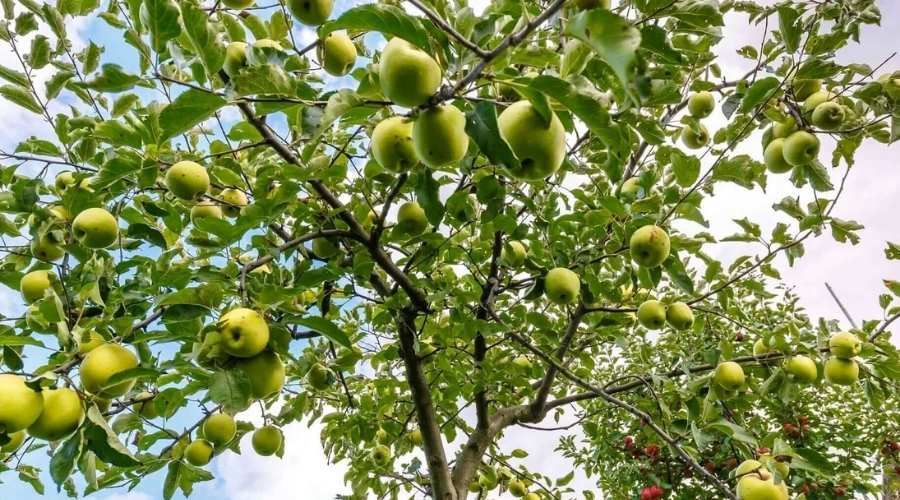
But low-chill doesn’t mean no-chill! Without sufficient chilling, a tree may leaf out unevenly, flower poorly, or produce very little fruit.
This is also why USDA hardiness zones can be misleading. Hardiness zones describe how cold an area typically gets, not how much winter chilling it receives.
An apple tree might grow beautifully in your yard without ever producing a fruit.
Why Apples Are Grafted
Apple genetics have another interesting twist: planting a seed from an Anna apple won’t produce another Anna tree.
Apples don’t grow true to seed. Each seed contains a new combination of genes, meaning the resulting tree may produce fruit quite different from its parent.
To preserve a particular variety, growers use grafting, joining a piece of the desired tree (the scion) to the rooted portion of another tree (the rootstock).
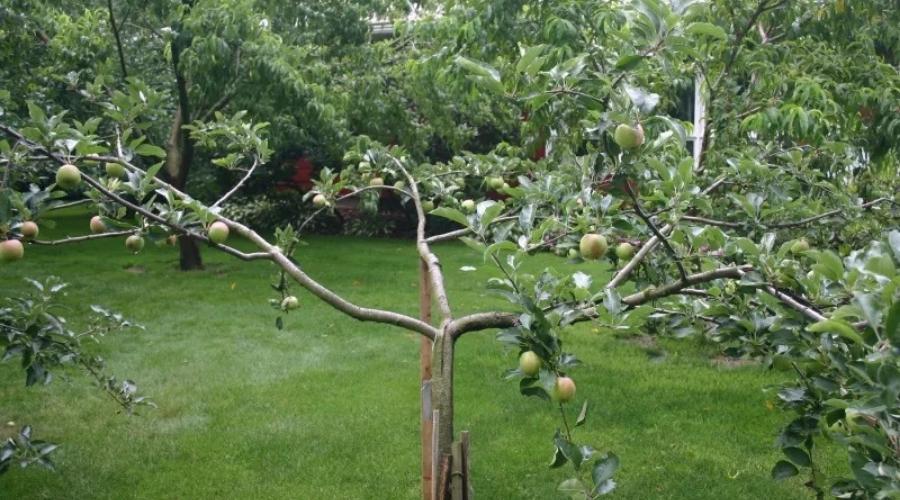
The scion determines the apple variety, while the rootstock can influence tree size, vigor, and how quickly the tree begins producing fruit.
This is how named apple varieties have been preserved for generations. In a way, today’s Anna and Dorsett Golden trees are living continuations of the original selections.
Rootstocks can influence many characteristics, but they can’t eliminate the chilling requirements of the variety grafted onto them.
Florida’s Low-Chill Apples
Although many apple varieties have been tested in Florida, these are continuously the top three recommendations for northern and north-central parts of the state.
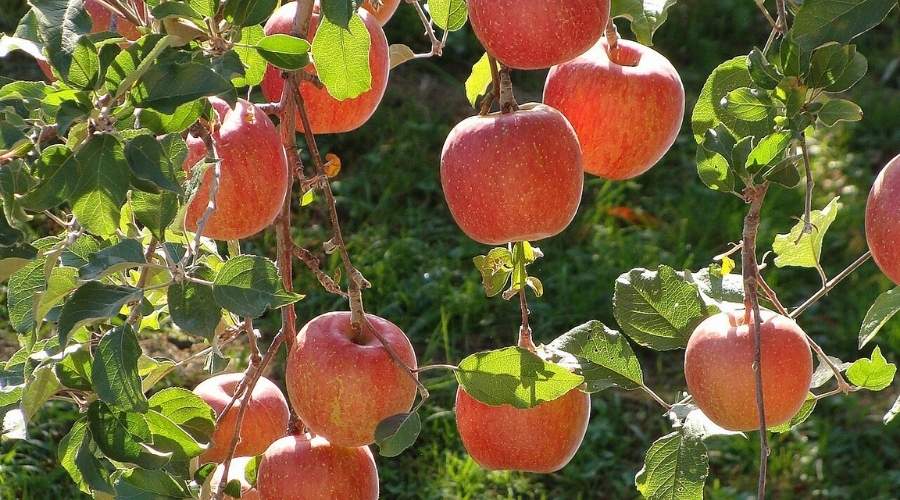
- Anna: Developed in Israel, Anna produces yellow-green apples with a red blush and crisp flesh.
- Chill requirement: Approximately 300 hours
- Taste profile: Sweet-tart, refreshing, and suitable for fresh eating or cooking
- Harvest: Typically late spring to early summer in suitable Florida locations
- Dorsett Golden: Originally discovered in the Bahamas, this variety produces golden-yellow apples, often with a light reddish blush.
- Chill requirement: Approximately 250 hours
- Taste profile: Sweet, crisp, and relatively firm, somewhat reminiscent of Golden Delicious
- Pollination: A particularly useful companion for Anna because their flowering periods overlap
- TropicSweet: Developed by the University of Florida, this variety produces attractive apples with firm flesh and relatively low acidity.
- Chill requirement: Approximately 300 hours
- Taste profile: Very sweet, crisp, and less tart than Anna
- Interesting feature: Developed specifically to combine fruit quality with adaptation to milder winters
A Few Lesser-Known Apples
Anna, Dorsett Golden, and TropicSweet aren’t the only apples with a history in warmer climates.
Apples used in the original Anna trial have also been conditionally recommended including several Israeli varieties, Ein Shemer, Maayan, Michal, and Shlomit. Their chilling requirements generally range from approximately 375 to 450 hours. Many ripen later in summer, when Florida’s humidity, rainfall, and pest pressure can make fruit production more challenging.
Heritage varieties such as Shell of Alabama, Cox Winter, Joy, and Terry Winter have also been reported to produce in Florida, although they weren’t included in the same formal cultivar evaluation.
And then there’s Ben Davis, a once-popular American commercial apple that occasionally appears on southern growing lists. Its historical importance is interesting, but that shouldn’t be confused with evidence of reliable production in subtropical Florida.
These varieties are worth knowing about, especially for gardeners interested in apple history and breeding. However, they aren’t all equally suitable for Florida.
Growing Apples In Central Florida
Florida is a large state, and successful apple production in Gainesville or Tallahassee doesn’t necessarily translate to Brevard or Orange County.
Even Anna and Dorsett Golden, among the lowest-chill varieties available, may struggle to receive enough winter chilling for consistent fruit production along the Space Coast.
Northern Brevard, particularly around Mims, may offer a better opportunity in favorable locations. Even there, however, growing apples is best approached as an experiment rather than a guaranteed harvest.
This is an important distinction often missing from online gardening advice. A variety described as suitable for Florida may have been evaluated in regions considerably farther north than Melbourne, Rockledge, or Orlando.
The challenge isn’t necessarily keeping an apple tree alive. It’s providing the seasonal conditions needed for flowering and fruit production.
Growing and Harvesting Florida Apples
For gardeners in areas where low-chill apples have demonstrated success, a few basic practices can help support healthy trees:
- Sunlight: Choose a location receiving at least six to eight hours of direct sun.
- Soil and water: Provide well-drained soil and consistent moisture, especially during establishment.
- Pollination: Plant compatible varieties with overlapping bloom periods, such as Anna and Dorsett Golden.
- Pruning: Maintain an open canopy for sunlight penetration and air circulation.
- Pest management: Watch for fungal diseases and insect pests, particularly during Florida’s humid growing season.
Grafted apple trees may begin bearing fruit within a few years, depending on the rootstock, tree age, and growing conditions.
Unlike the autumn harvests associated with northern orchards, Florida apples can ripen surprisingly early. In suitable growing regions, Anna, Dorsett Golden, and TropicSweet commonly produce fruit in late May through June.
Imagine harvesting apples while the rest of the country is still waiting for summer!
An Apple With a Story to Tell
From the mountains of Central Asia to breeding programs in Israel, a chance discovery in the Bahamas, and research orchards in Florida, apples have had quite an adventure.
Their history is a wonderful reminder of how much can be accomplished through plant selection, breeding, and a little horticultural curiosity.
And while Florida may never become apple orchard country, there’s still plenty to appreciate about these unusual varieties. For gardeners who enjoy experimenting, understanding the science behind their success can be every bit as rewarding as the harvest itself.
After all, gardening isn’t always about growing what everyone else grows. Sometimes it’s about discovering what’s possible, learning something new, and enjoying the process along the way.
At Rockledge Gardens, we’re always happy to help you explore fruit trees and find plants suited to your own little corner of Florida.